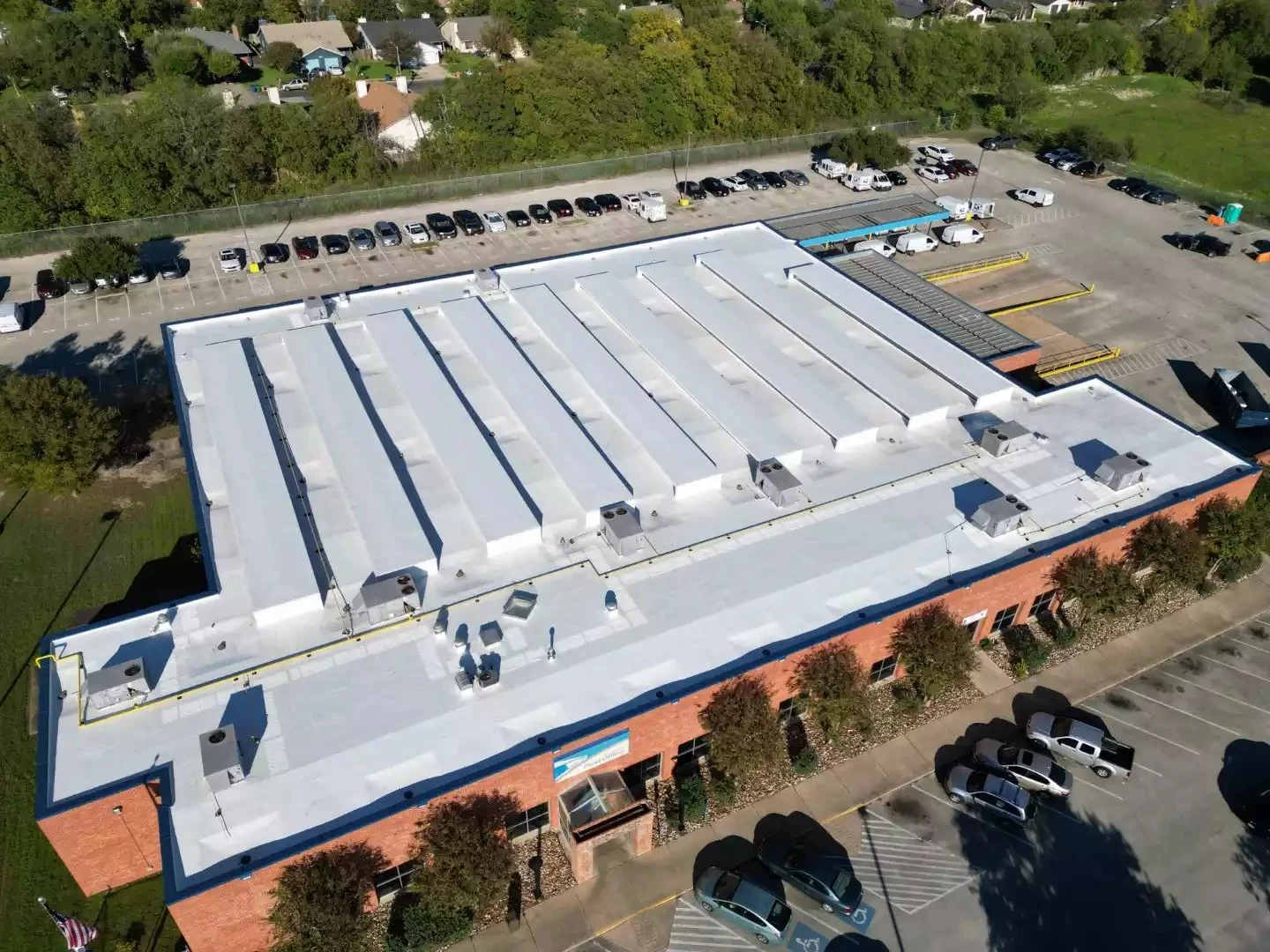
Roofing City, County, and Base-Adjacent Facilities
Public buildings on this coast carry a different set of pressures than a private commercial property. A city or county roof project usually has to clear a budget cycle, a public bid process, and sometimes a bond authorization before a crew ever shows up, and the building underneath still has to keep serving the public through all of it.
The Public-Sector Roof Stock Here
Harrison and Jackson County have a wide range of publicly owned buildings that need roof work on a regular cycle: courthouses, fire and police stations, public works facilities, libraries, and county administrative buildings, along with the contractor work that supports operations near Keesler Air Force Base. Many of these buildings were constructed decades apart, which means a single county's roof inventory can include everything from aging built-up roofing to more recent single-ply installations, each needing a different maintenance plan.
We inventory public buildings the way a facilities director actually needs to see them, ranked by remaining roof life and risk of failure, rather than a generic list. That's the information that supports a capital improvement budget request rather than a bare pass or fail on today's inspection.
Working Inside a Public Bid Process
Public procurement has its own rules, and we're used to working inside them, from formal sealed bid packages to smaller jobs handled under a public entity's informal purchasing threshold. Bonding, insurance certificates, and prevailing wage requirements where applicable all get built into the proposal from the start rather than negotiated after an award, which keeps the process moving instead of stalling at the contract stage.
Public buildings often can't move on the timeline a private owner would choose. A roof that clearly needs replacement might sit through one more budget cycle waiting on funding approval, and we're straightforward about what interim maintenance can realistically buy in that gap and what it can't. We've seen agencies lose that gap entirely by patching a failing built-up roof with short-term repairs that stop addressing the actual problem, which usually costs more in the end than a properly scoped interim plan would have.
Keeping Essential Facilities Operating
A fire station or a public works building with an active fleet garage doesn't get to close for roof work the way an empty office building might. We schedule around the operational needs of the specific facility, whether that means keeping apparatus bay doors clear during a re-roof or working around a courthouse's public hours so foot traffic and roofing work don't collide.
Emergency response facilities get particular attention around hurricane readiness, since these are the buildings the county depends on staying operational during and immediately after a storm. We treat pre-season roof inspections on fire, police, and emergency operations buildings as a priority category, separate from the routine cycle applied to less critical structures.
- Fire and police stations that need to stay operational through the work
- Courthouses and administrative buildings with public foot traffic
- Public works and fleet maintenance facilities
- Libraries and community buildings on tighter maintenance budgets
- Facilities supporting operations connected to Keesler Air Force Base
Budget-Cycle Planning
Public entities plan capital spending years out, and a roof replacement often has to compete against other infrastructure needs for the same limited funding. We provide the kind of documentation, cost estimates, and remaining-life assessments that a facilities director can actually bring into a budget meeting, framed in terms the county commission or city council will need to see to approve the spend.
Where a full replacement isn't funded yet, we're direct about what a maintenance or coating program can extend and for roughly how long, so the agency isn't caught by a failure before the next funding cycle opens.
Documentation That Survives an Audit
Public spending gets reviewed, and roofing contracts are no exception. We keep the kind of records, photos, and change order documentation that hold up when a county auditor or a state agency reviewer asks how a project was managed, because a public works director shouldn't have to defend a roofing contract with incomplete paperwork.
That same documentation standard applies to work supporting operations tied to Keesler Air Force Base, where contractors and support facilities often face additional coordination and access requirements beyond a standard municipal project. We plan for that added lead time rather than treating it as a surprise once a job is already scheduled.
Questions Facilities Directors and Procurement Officers Ask Us
Can you work within our formal sealed bid process?
Yes, we regularly bid public work and build bonding and insurance requirements into the proposal from the start.
How do you handle prevailing wage requirements when they apply?
We account for applicable wage requirements in the estimate up front, so there's no surprise adjustment once the contract is awarded.
Can you keep our fire station or public works building operational during the work?
Yes, we plan the sequence around apparatus bay access and other operational needs specific to the facility rather than a generic construction schedule.
What documentation do you provide for budget approval requests?
We provide remaining-life assessments, condition photos, and cost estimates in a format built specifically for a commission or council review, rather than a bare-bones inspection report.
What if funding for a full replacement isn't approved yet?
We'll lay out honestly what an interim maintenance or coating approach can extend and for how long, so the facility isn't caught off guard before the next budget cycle.