Roofing Apartment Communities Across the Gulfport-Biloxi Rental Market
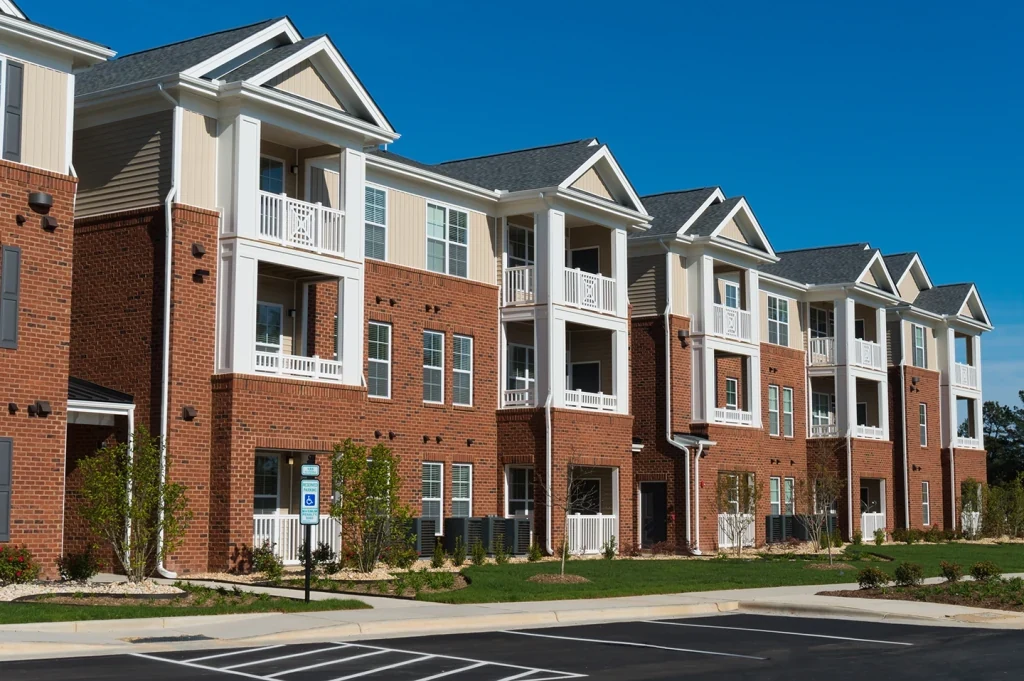
Apartment communities along the Coast, from garden-style properties near Highway 49 to older complexes closer to the beach, carry roofs that see two kinds of stress most single-tenant commercial buildings don't: constant occupancy across dozens of units, and the concentrated wind exposure that comes with pitched roof planes and multiple ridge lines instead of one flat field.
Occupied Units Change How Every Project Runs
A commercial building with one tenant can often be closed off during roof work. An apartment community can't, since residents live there through the entire project, and a roof crew working overhead every day is a disruption owners have to manage carefully or risk a wave of complaints and lease non-renewals.
We sequence apartment re-roofs building by building across a multi-building property, giving property management a schedule they can communicate to residents in advance, with clear windows for when work will be directly over a given unit versus elsewhere on the property.
Storm Damage Drives Most Multifamily Re-Roof Decisions
A lot of apartment re-roof projects on this coast start after a named storm, when wind or hail damage pushes a property from routine maintenance into an insurance-driven replacement. That timeline compresses everything: documentation has to happen fast, the claim process has to be supported with clear evidence, and residents displaced by interior water damage need the work to move quickly.
We document storm damage thoroughly and promptly after an event, since insurance carriers respond better to a claim backed by dated photos and a clear damage assessment than one submitted weeks later without that record.
Insurance Documentation Ownership Groups Need
Multifamily ownership groups on this coast typically carry named-storm and wind-hail coverage with specific documentation requirements, and a claim without pre-loss condition records or a clear post-storm damage report is a harder claim to get approved at full value. We don't promise claim outcomes, since that's not something a contractor controls, but we do provide the documentation a claim needs to be evaluated fairly.
A thorough insurance-support package typically includes:
- Dated photo documentation of damage across all affected buildings on the property
- A written scope of repair or replacement tied to the specific damage observed
- Pre-loss condition records where available, useful for comparison
- Material and labor cost estimates broken out by building for multi-building claims
- A timeline for completion that carriers and adjusters can reference
Pitched Roof Planes and Wind-Driven Rain
Unlike a flat commercial roof, most apartment buildings on this coast use pitched shingle or standing-seam roof planes with multiple hips, valleys, and ridge lines. Those transitions are where wind-driven rain during a tropical system finds its way in, particularly around valley flashing and ridge vents that have aged or were installed to a lower wind standard than current code calls for.
We check valley and ridge flashing specifically during any pre-season or post-storm inspection, since these details fail more often on multifamily properties than the shingle or panel field itself.
Coordinating With Property Management and Residents
Roof work over occupied apartment buildings works best when residents know what to expect. We provide property management with a schedule and, where the property wants it, notice language they can distribute to residents ahead of work starting on their specific building, so a crew on the roof doesn't come as a surprise.
Older Complexes Near the Beach Versus Newer Inland Builds
Apartment stock closest to the beachfront in Biloxi and Gulfport tends to be older, built before current wind-uplift standards existed, while newer complexes further inland along Highway 49 were constructed under more recent code with better fastening and flashing detail from the start. That age gap matters more here than in most inland markets, since the older beachfront buildings face the highest wind and salt exposure while running the weakest original roof design.
We weight inspection frequency toward the older, closer-to-water properties in a multi-property portfolio, since these buildings combine the highest exposure with the least favorable starting design, a combination that produces storm damage faster than a newer inland complex sees.
Roof Replacement Reserve Planning
Multifamily ownership groups typically budget for roof replacement through a capital reserve fund, and a reserve study that underestimates coastal wind and salt exposure leaves a property under-funded when replacement actually comes due. A roof rated for a twenty-year service life inland may realistically need attention closer to fifteen years on an exposed Coast property, and a reserve plan built on the manufacturer's generic timeline rather than local conditions can leave an owner short when the bill arrives.
We give ownership groups a realistic remaining-life estimate based on the property's actual coastal exposure, so reserve planning reflects what the roof will really need rather than a national average that doesn't account for salt air and hurricane wind loading.
Common Questions From Property Owners and Managers
Can a multi-building complex be re-roofed without relocating residents?
In almost every case yes. Work is sequenced building by building, and residents typically remain in their units throughout, aside from any unit with active interior damage needing repair.
How fast should storm damage be documented for an insurance claim?
As soon as possible after the event. Dated photos and a clear scope taken promptly support a stronger claim than documentation assembled weeks after a storm.
What roof detail causes the most leaks on apartment buildings here?
Valley and ridge flashing on pitched roof planes, more often than the shingle or panel field itself, particularly on older buildings with flashing installed to a lower wind standard.
Do you guarantee insurance claims will be approved?
No, and any contractor promising that outcome isn't being straight with you. We provide thorough documentation and a clear scope so the claim can be evaluated on its merits.
How often should a multifamily property schedule roof inspections?
Annually at minimum, with an additional check after any named storm that brought sustained wind or hail to the property.