Roofing Freestanding Restaurants Along US-90 and Highway 49
The standalone restaurants strung along US-90 and the Highway 49 corridor toward Orange Grove carry small roof footprints but a demanding equipment load. A restaurant roof problem doesn't get the luxury of a slow response, since every day the kitchen can't run is a day of lost revenue an owner-operator feels immediately.
Small Roof, Heavy Equipment Load
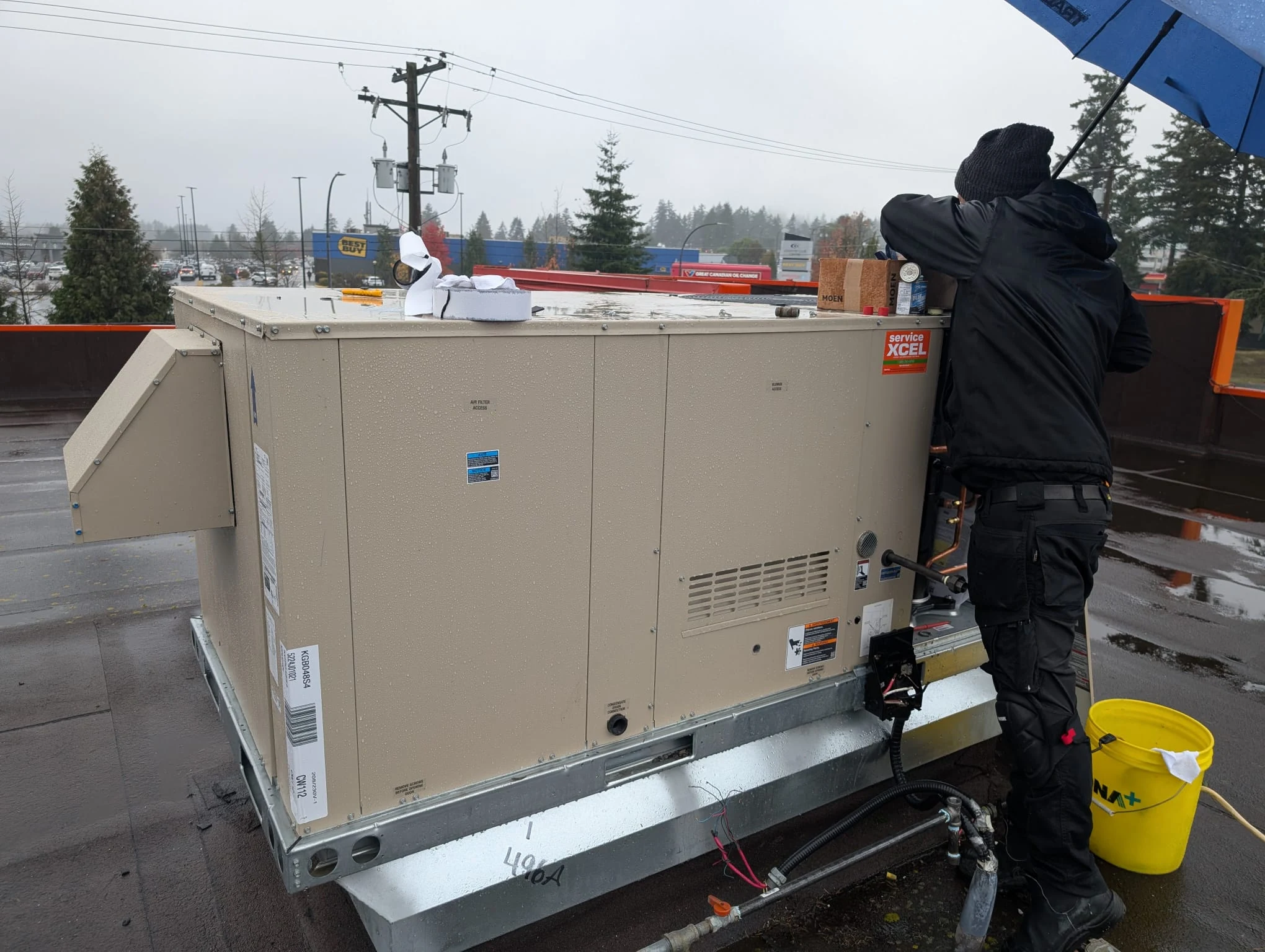
A freestanding restaurant roof is usually a fraction of the size of a retail or warehouse roof, but it carries a disproportionate amount of rooftop equipment: exhaust fans, makeup air units, walk-in cooler condensers, and grease exhaust curbs, all concentrated over a relatively small deck. That density means more penetrations per square foot than almost any other commercial building type, and more opportunities for a flashing failure.
We inspect restaurant roofs penetration by penetration rather than treating them as a standard flat-roof assessment, because the actual risk on these buildings sits at the equipment curbs, not the open field.
Grease Exhaust Curbs Are the Most Common Failure Point
Grease-laden exhaust from a commercial kitchen degrades roofing membrane and flashing around the exhaust curb faster than any other part of a restaurant roof, particularly on older mod bit or built-up systems where grease can work into seams over time. A curb that isn't flashed and maintained specifically for grease exposure will fail well before the rest of the roof does.
We spec grease-resistant flashing at exhaust curb penetrations and check that condition on every restaurant inspection, since this single detail accounts for more restaurant roof leaks on this coast than storm damage does.
Fast-Turn Repair Without a Kitchen Shutdown
Most restaurant leaks trace to a specific, isolated source: a failed pipe boot, a cracked curb seal, a gap in exhaust flashing. That means most restaurant roof problems don't require a full-roof shutdown to fix, just focused access to the failure point. An owner-operator doesn't need to hear that a full re-roof is the only path when a targeted repair solves the actual leak.
We diagnose the specific source before recommending scope, and where a targeted repair legitimately fixes the problem, that's what gets proposed, not a larger job the roof doesn't need yet.
What We Check on a Restaurant Roof Visit
- Grease exhaust curb flashing and seal condition
- Walk-in cooler and condenser unit curb integrity
- Pipe boots and plumbing vent seals
- Membrane condition immediately surrounding each rooftop penetration
- Signage and awning mounting points that penetrate the roof deck
- Drain and gutter function around the building's smaller footprint
Hurricane Prep for a Small Commercial Building
A standalone restaurant may be smaller than a big-box store, but it's just as exposed to hurricane winds coming off the Gulf, and a lightweight rooftop unit or exhaust hood that isn't properly anchored can become a projectile in a storm. We check equipment anchoring and curb attachment as part of any pre-season inspection, alongside membrane condition.
Owners who've been through a storm season with a poorly anchored rooftop unit tend to prioritize this the next time around. The ones who haven't often don't think about equipment anchoring as a roofing issue at all until it becomes one.
Franchise and Multi-Location Owner Considerations
A lot of the restaurant buildings along US-90 and Highway 49 are run by franchise owner-operators managing more than one location across the Coast, which changes how roof maintenance gets prioritized. A single-location owner feels every roof dollar directly; a multi-unit operator has to weigh which of several locations needs attention first, often without visiting each roof personally on a regular basis.
We give multi-location owners a comparative condition summary across their properties rather than a single-site report in isolation, so decisions about where to spend a limited maintenance budget this year are based on which roof actually needs it most, rather than which store happened to call last.
Signage and Rooftop-Mounted Equipment
Freestanding restaurants often mount pole signs, monument sign electrical runs, or satellite and communication equipment with conduit that penetrates the roof deck near the parapet, in addition to the kitchen exhaust and HVAC equipment already on the roof. Each of these penetrations gets installed by a different trade at a different time, and flashing quality around them varies a lot depending on who did the work and when.
We check every roof penetration on a restaurant inspection, kitchen-related or not, since a poorly flashed conduit run for exterior signage can leak just as readily as a failed grease exhaust curb.
Common Questions From Restaurant Owners
Can a leak get fixed without closing the kitchen?
In most cases yes. Targeted repairs at a specific failure point, like a curb or pipe boot, usually don't require shutting down kitchen operations at all.
Why do restaurant roofs leak more often around the exhaust hood?
Grease-laden exhaust degrades standard flashing and membrane around that curb faster than anywhere else on the roof, so that area needs grease-resistant materials and more frequent inspection.
How often should a restaurant roof get inspected?
At minimum once a year and ideally before hurricane season, given how much rooftop equipment sits on a typical restaurant roof and how quickly a small failure can turn into a kitchen shutdown.
Do rooftop units need to be checked for storm anchoring?
Yes. Exhaust hoods, condensers, and small rooftop units that aren't properly anchored can become storm hazards, and this gets checked as part of a pre-season inspection.
Is a full re-roof usually needed for a restaurant leak?
Not usually. Most restaurant leaks trace back to a specific penetration or curb, and a targeted repair often resolves the problem without a full system replacement.