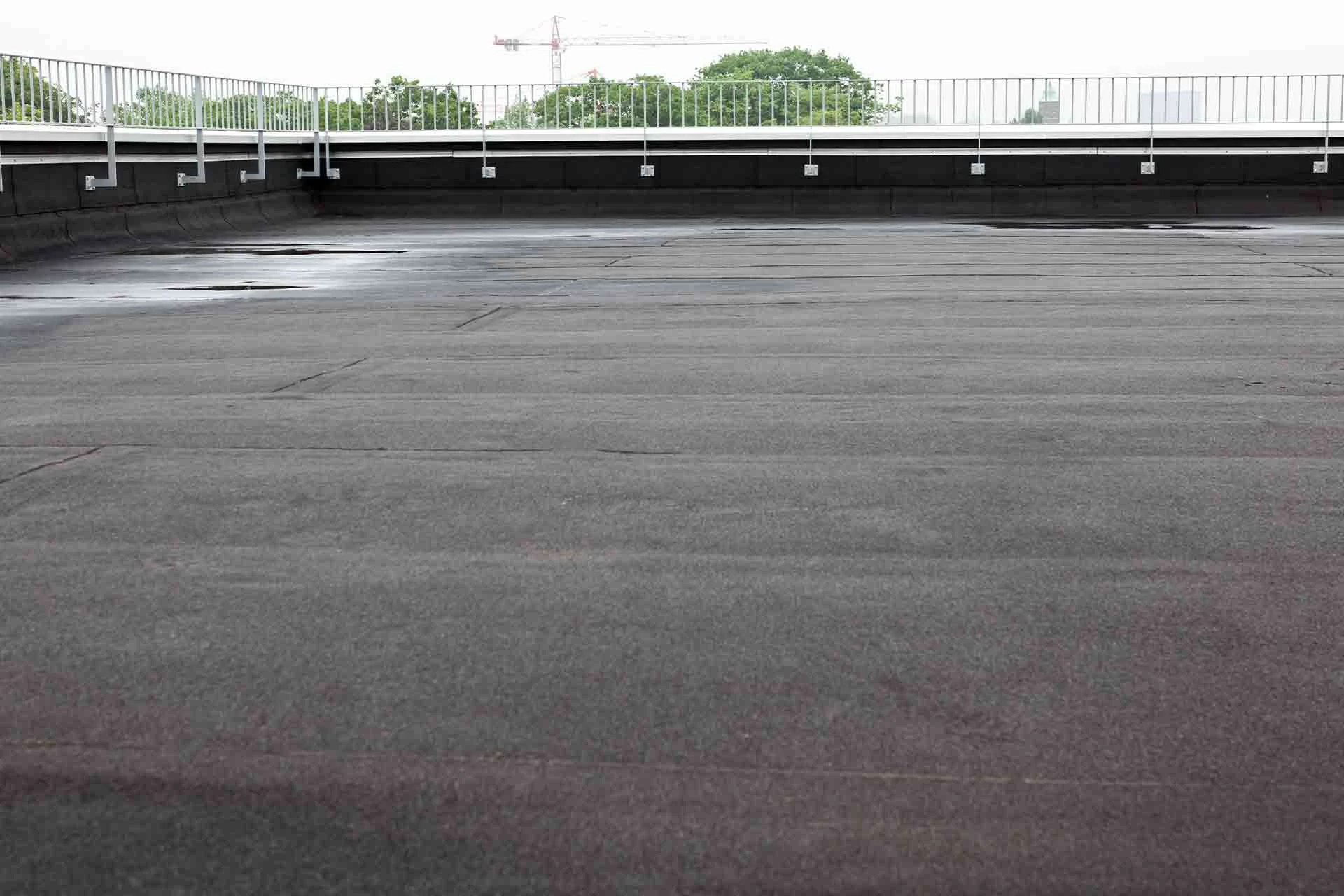
Black EPDM for Buildings That Don't Need Reflective Roofing
Black EPDM isn't the first membrane most owners picture on a Mississippi Gulf Coast building, and for roofs baking under summer sun with no shade, that instinct is often right. But EPDM still makes sense in specific situations here, sheltered roof sections, buildings with heavy shading, or projects where the ballasted assembly's wind performance and low material cost outweigh the reflectivity tradeoff. The question isn't whether EPDM works technically. It's whether it's the right fit for your building's exposure.
What EPDM Actually Is and Where It Fits
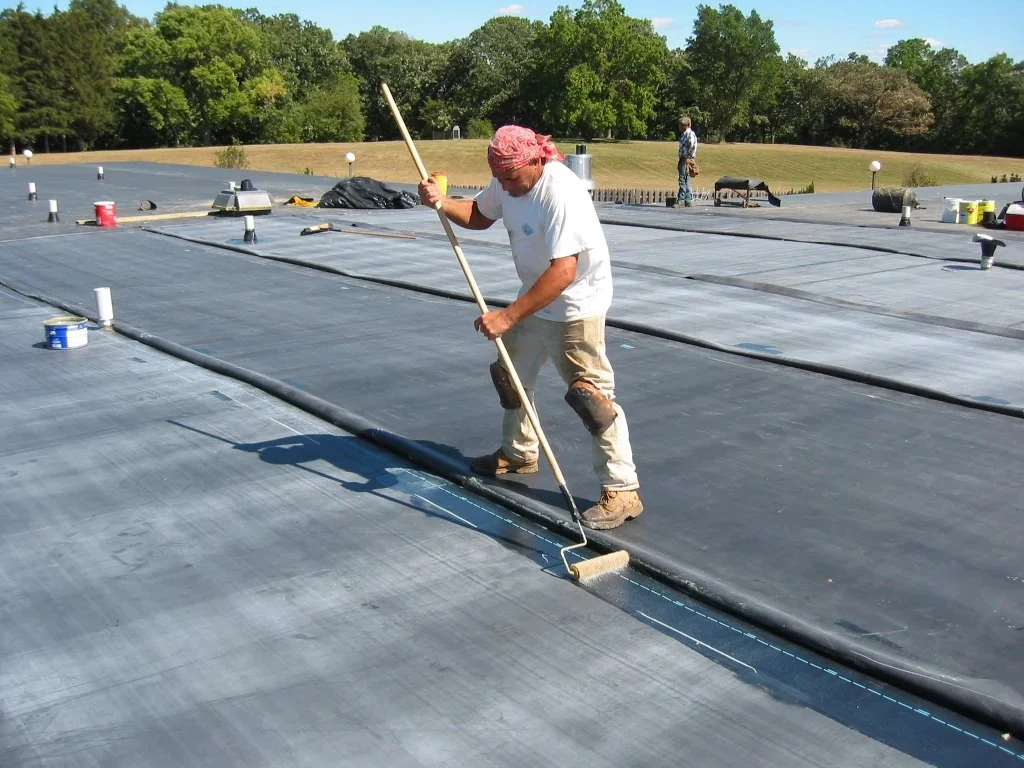
EPDM is a synthetic rubber membrane, typically installed in large sheets with fewer field seams than TPO because it comes in wider rolls. It's been used on commercial low-slope roofs for decades and has a long track record for weathering and flexibility, particularly in temperature swings. On the Gulf Coast, where summer surface temperatures run high and winter brings occasional hard freezes, that flexibility matters, the membrane doesn't get brittle the way some materials can during a cold snap.
Where EPDM loses ground to TPO here is heat absorption. Black membrane holds solar heat rather than reflecting it, which raises rooftop equipment temperatures and can increase cooling loads for the space below. We're upfront with owners about that tradeoff before recommending EPDM over a reflective alternative.
Wind Uplift: Ballasted vs. Fully Adhered
EPDM can be installed ballasted, mechanically fastened, or fully adhered, and the wind performance differs significantly between those methods. Ballasted EPDM relies on stone or paver weight to resist uplift rather than fastener density, which works on some low-rise buildings but requires structural capacity to carry the ballast load and isn't the assembly we'd choose for a building in a high wind-exposure category near open water.
Fully adhered EPDM, where the membrane is bonded to the substrate with adhesive across the full surface, generally performs better under the wind-uplift pressures this coastline sees during tropical systems. For most commercial projects here, we spec fully adhered or enhanced mechanically fastened assemblies rather than loose-laid ballast, specifically because of the storm wind loads Harrison County design pressures require.
Seams: Tape-Bonded, Not Welded
Unlike TPO's heat-welded seams, EPDM seams are joined with seam tape or liquid adhesive, creating a bonded rather than fused connection. That seam type has a long service history, but it's also the part of an EPDM roof most likely to need attention over the membrane's life, particularly at T-joints and penetration details. We inspect seam integrity closely on every EPDM roof we service, since seam failure, not membrane failure, is the most common source of leaks on aging EPDM systems along this coast.
Where Black EPDM Makes Sense on a Gulfport Roof
We recommend black EPDM in specific situations rather than as a default:
- Roof sections with significant shading from adjacent structures, where solar heat gain is less of a factor
- Buildings with lower cooling-load sensitivity, such as unconditioned warehouse or storage space
- Projects where budget constraints favor EPDM's typically lower material cost over TPO
- Roofs with irregular geometry where EPDM's flexibility and fewer seams simplify installation
- Buildings where structural capacity supports a ballasted assembly and wind exposure is moderate
- Retrofit projects matching an existing EPDM roof section rather than mixing membrane types
UV, Humidity, and Long-Term Weathering
EPDM handles UV exposure well over time, resisting the surface degradation that can affect lower-quality membranes, and it doesn't develop the same reflectivity-loss issue TPO can show as it ages, simply because it was never reflective to begin with. High humidity and heavy tropical rainfall don't degrade the membrane material itself, but as with any low-slope system, standing water from inadequate drainage will accelerate wear at seams and flashings over repeated cycles.
Salt air has minimal effect on the rubber membrane directly. The exposure risk on a coastal EPDM roof is the same as on any other system here: fasteners, edge metal, and rooftop equipment hardware corrode faster near open water, so we spec corrosion-resistant components regardless of which membrane sits on top.
Cold-Weather Flexibility Isn't the Priority Here, But It's Not Nothing
EPDM's reputation for staying flexible in freezing temperatures is one of the reasons it built a following in colder climates, and that's a less relevant selling point on a coastline where hard freezes are rare and brief. Still, this coast does see occasional winter cold snaps, and a membrane that gets brittle during those events is more vulnerable to cracking at flashings and penetrations when a cold night is followed by a warm, humid morning and rapid thermal expansion. EPDM handles that swing better than some rigid alternatives.
That said, we don't recommend EPDM specifically for cold-weather performance on a Gulf Coast building, the honest reason to choose it here is almost always cost, shading, or matching an existing roof section, with cold flexibility as a secondary benefit rather than the deciding factor.
Common Questions About Black EPDM on the Coast
Does black EPDM increase my building's cooling costs?
It can, compared to a reflective white membrane, because dark EPDM absorbs more solar heat. Whether that's significant depends on the insulation level below the roof and how much the space is actively cooled.
Is EPDM rated for hurricane wind uplift?
It can be, but the rating depends entirely on the installation method. Fully adhered and enhanced mechanically fastened EPDM assemblies can meet Harrison County wind-uplift requirements; loose-laid ballasted systems generally cannot for higher-exposure buildings.
How long do EPDM seams last before needing attention?
Well-installed seams can perform for many years, but they're the most common maintenance item on an aging EPDM roof. We check seam condition at every inspection rather than waiting for a visible leak.
Can I repair a punctured EPDM roof instead of replacing it?
Often, yes. EPDM patches and repairs reliably as long as the membrane isn't broadly degraded and the substrate underneath is still sound.
Should I switch from EPDM to TPO on my next re-roof?
It depends on your building's cooling profile, wind exposure, and budget. We'll walk the roof with you and lay out the real tradeoffs before you commit either way.