Reflective EPDM for Owners Who Want Rubber's Flexibility Without the Heat
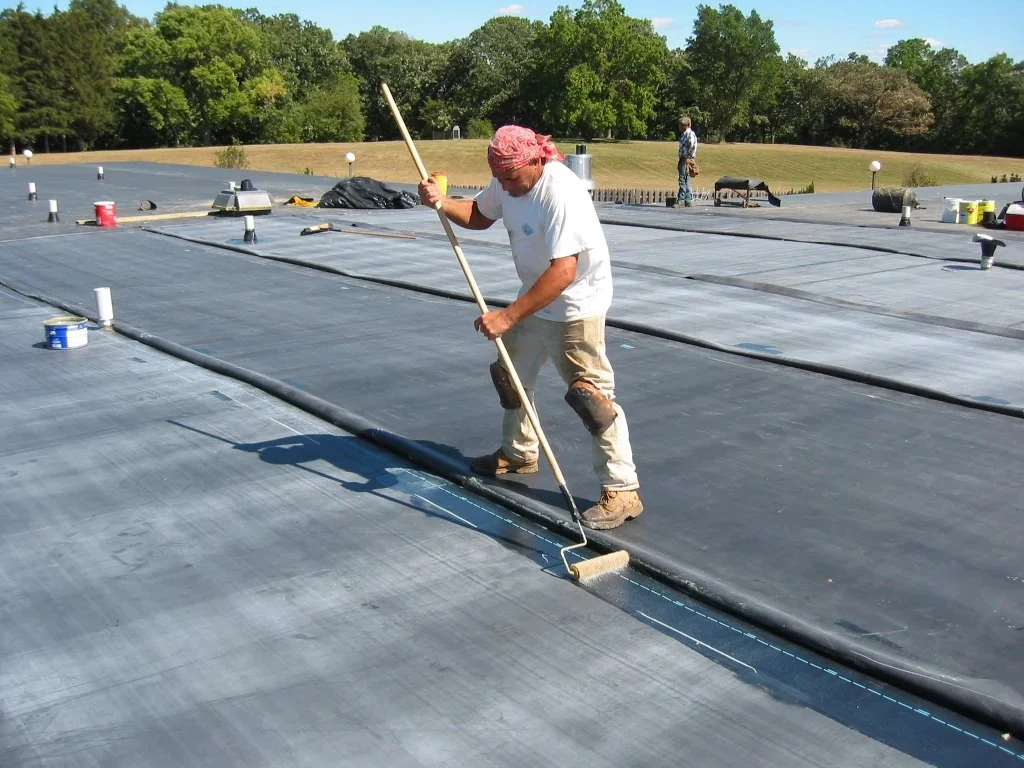
Some owners like everything about EPDM's track record and flexibility but don't want the rooftop heat gain that comes with a black membrane on a coastal building. White-faced EPDM, sometimes called a laminated or co-extruded membrane, gives them both: the same rubber base material with a reflective white surface layer bonded to the top. It's a narrower product category than standard black EPDM or TPO, and we recommend it only where it genuinely fits the building.
How White EPDM Differs From Standard Black Membrane
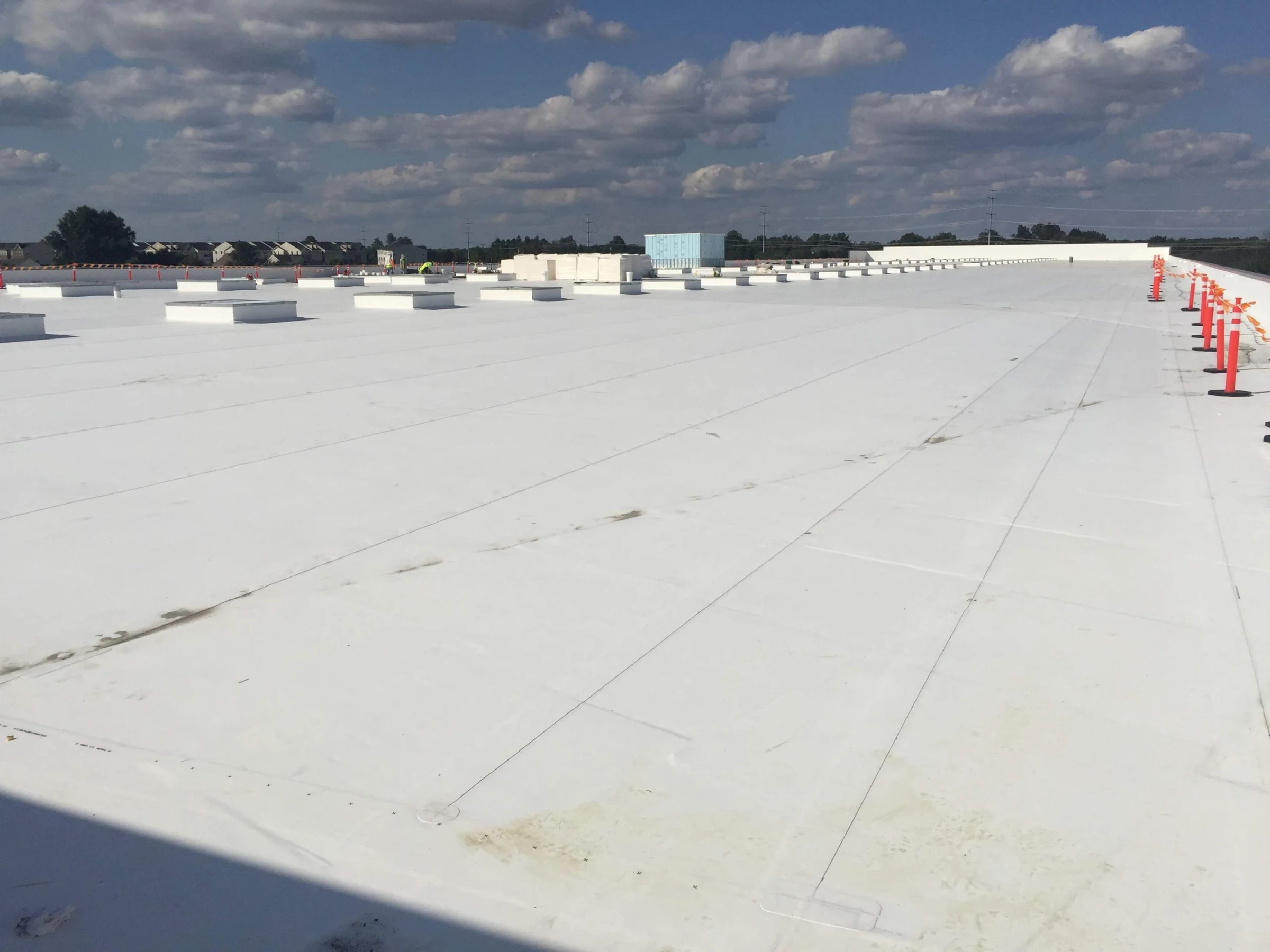
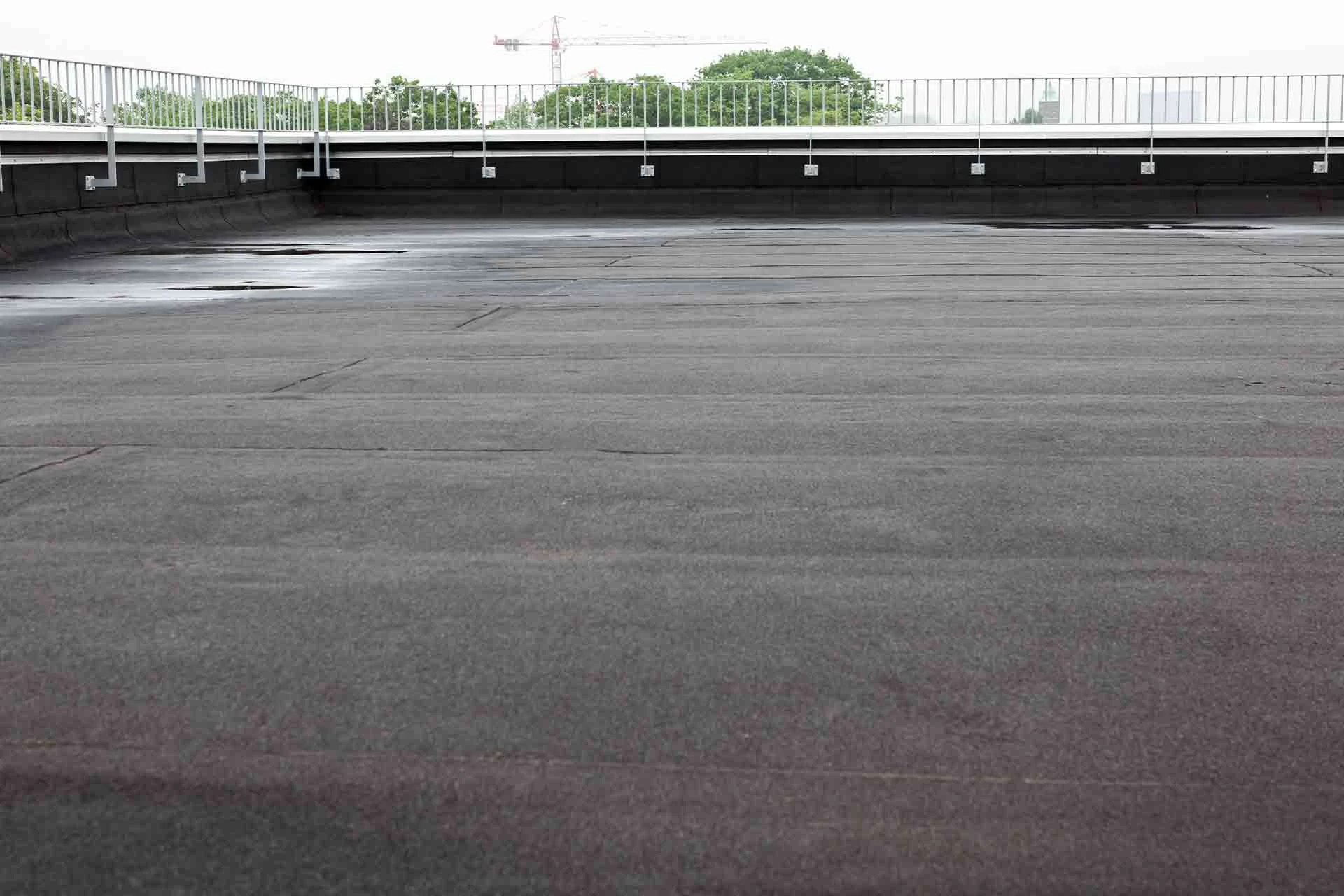
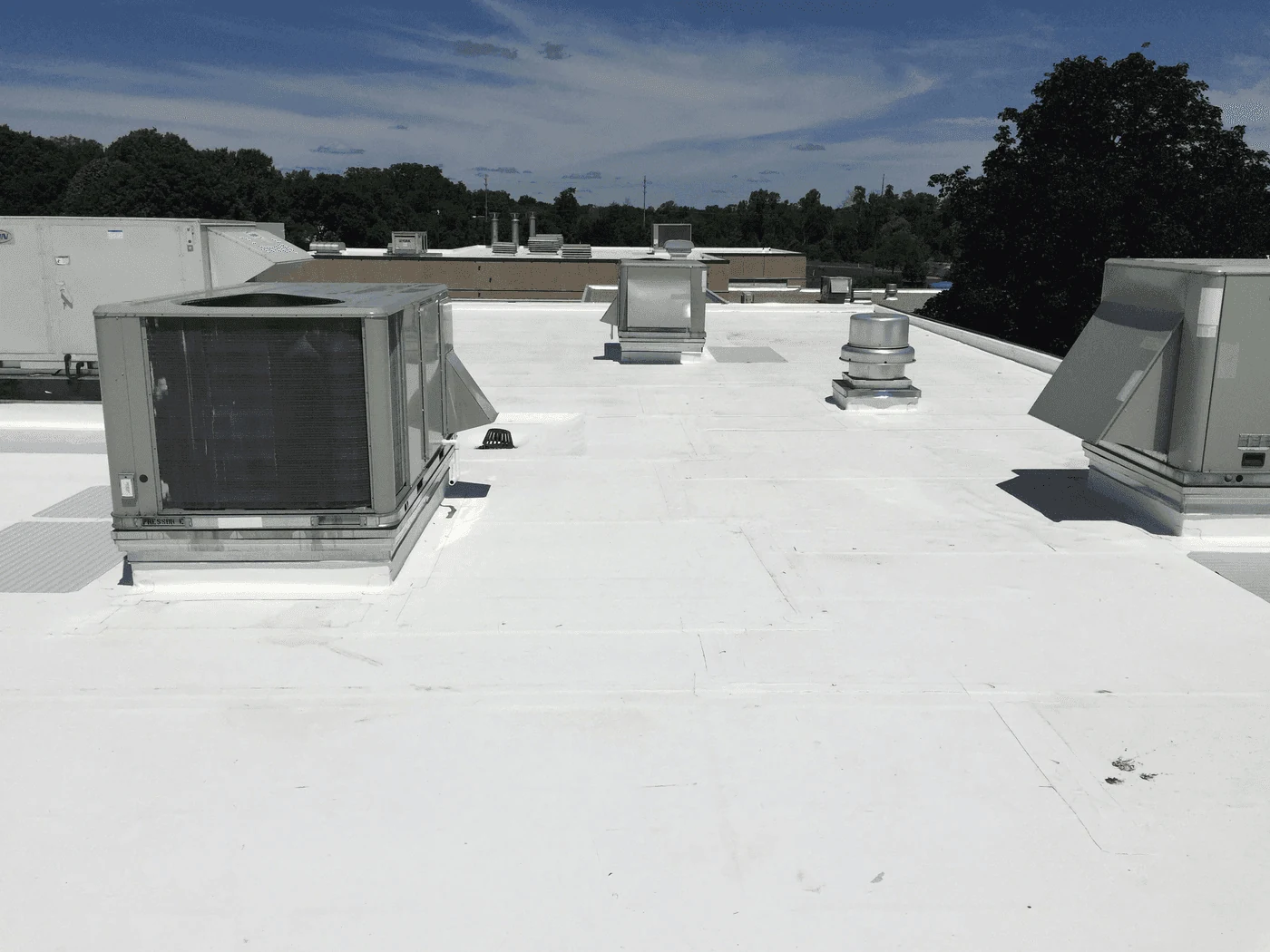
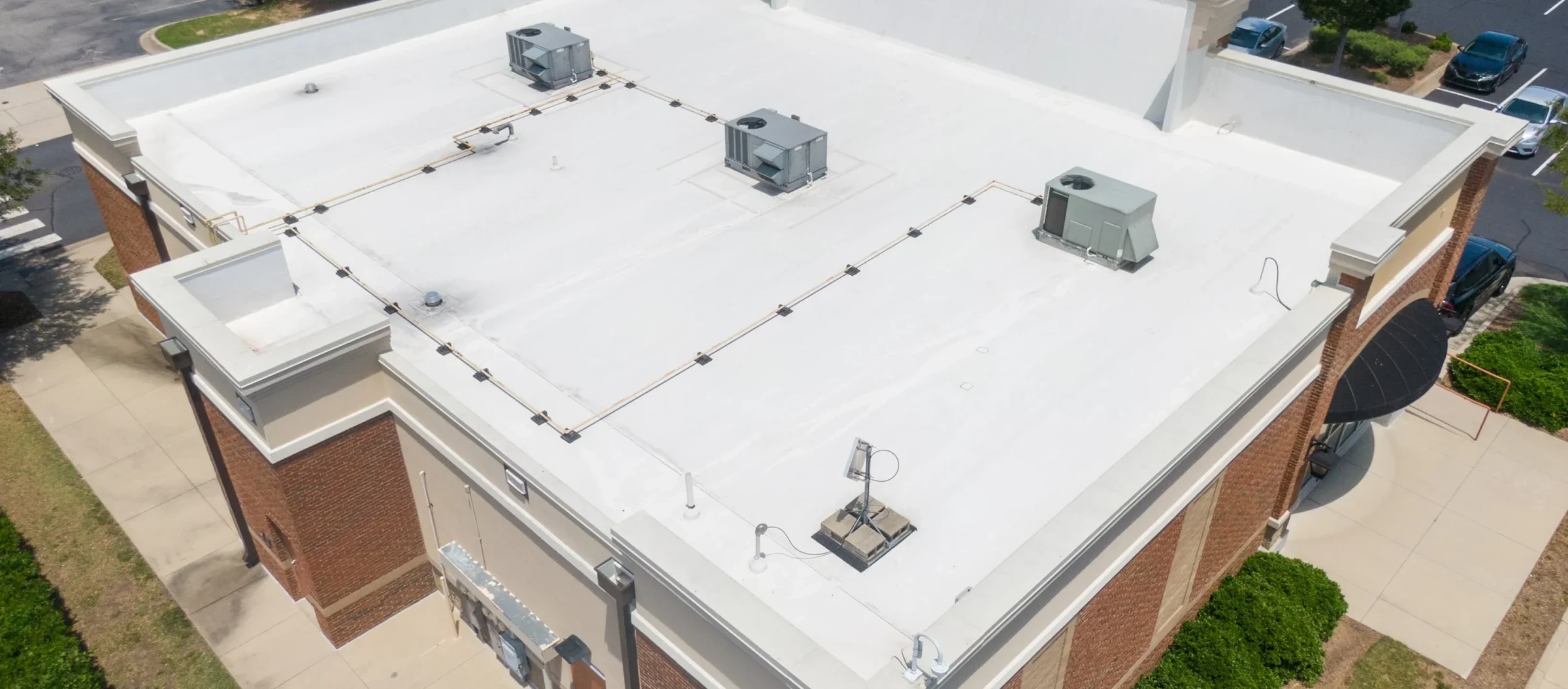
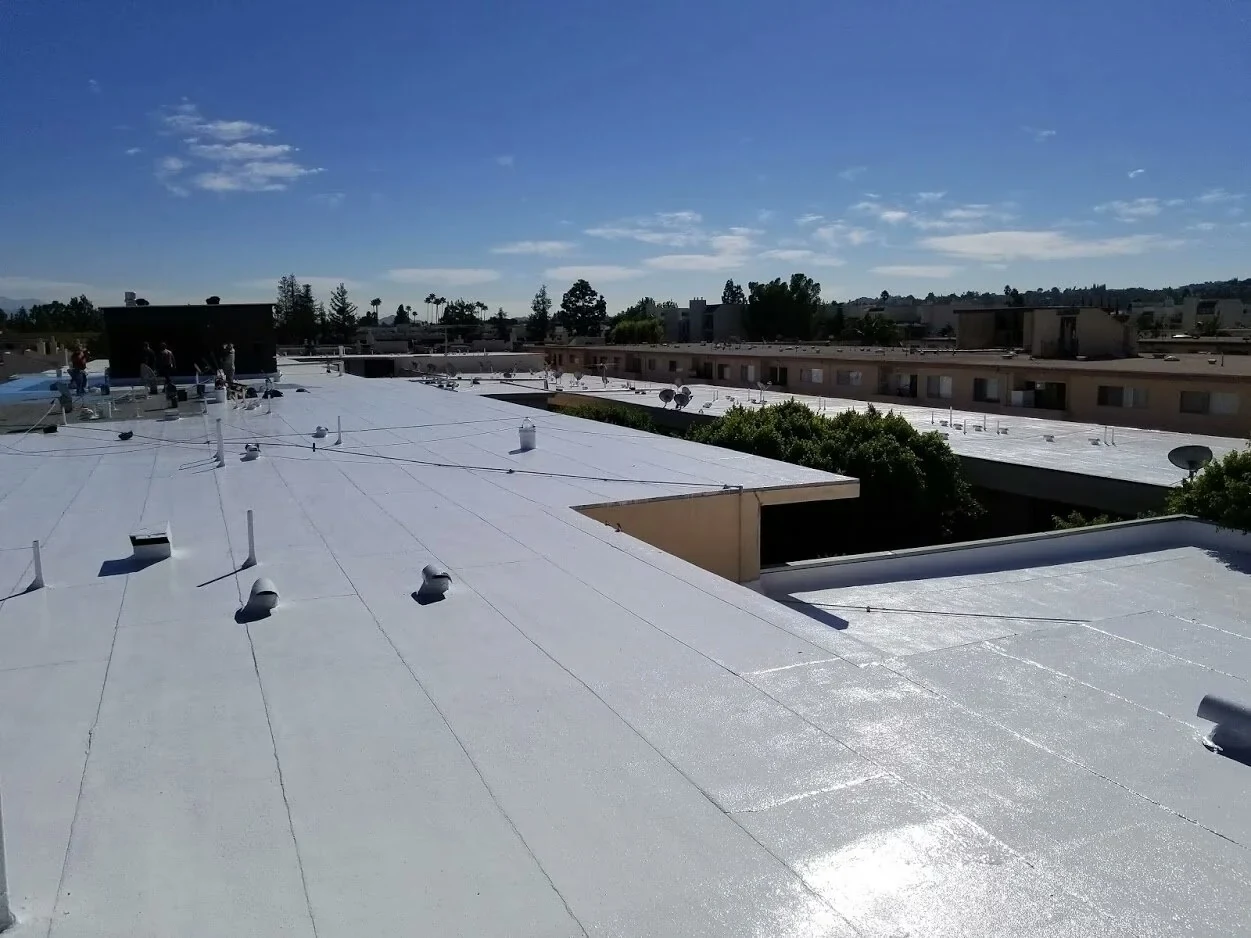
White EPDM is manufactured with a white thermoplastic or reflective coating laminated to the top surface of standard EPDM rubber, giving the roof solar reflectivity closer to TPO while keeping EPDM's underlying flexibility and long weathering history. The core membrane behaves like standard EPDM in terms of movement and cold-weather performance, but the surface reflects a meaningful share of solar radiation rather than absorbing it.
The tradeoff is cost and product availability. White EPDM typically costs more than standard black EPDM and is a less common product than TPO, which affects material lead times on some projects. We only spec it when the specific combination of rubber flexibility and reflectivity actually matters for the building.
Wind Uplift and Installation Method
Wind performance for white EPDM follows the same rules as black EPDM: it depends on installation method, not membrane color. Fully adhered and enhanced mechanically fastened assemblies perform well under the wind-uplift pressures Harrison County's design codes require, particularly for buildings closer to open water where corner and perimeter pressures run highest. Loose-laid ballasted systems carry real weight and structural requirements and aren't the assembly we'd choose for higher wind-exposure buildings on this coast.
We engineer the fastening or adhesion pattern to the building's actual wind-uplift rating, with enhanced attention at perimeters and corners, the same as we do on every membrane type. The reflective surface doesn't change the wind engineering, that's a separate calculation entirely.
Reflectivity, UV, and Heat Performance on the Gulf Coast
The reflective surface on white EPDM reduces rooftop surface temperatures significantly compared to black EPDM, which matters directly here given how much direct summer sun a flat Gulf Coast roof takes on. Lower surface temperature means less thermal cycling stress on the membrane and seams over time, and it can reduce cooling loads for conditioned space below, depending on the building's insulation and HVAC setup.
UV exposure over years of Gulf Coast sun can gradually reduce the reflective surface's brightness, similar to what happens with white TPO, though the underlying rubber membrane continues performing its structural role even as reflectivity fades somewhat. We track reflectivity degradation as part of routine inspections on white membrane roofs.
Where White EPDM Is the Right Call
We recommend white EPDM in specific scenarios rather than as a default choice:
- Buildings needing reflective performance but with roof geometry or budget favoring EPDM's fewer, wider seams over TPO
- Retrofit projects extending an existing white EPDM roof section rather than transitioning to a different membrane
- Owners prioritizing EPDM's long cold-flexibility track record while still wanting solar reflectivity
- Roofs where structural loading or geometry made ballasted EPDM the prior standard, now upgrading to adhered white membrane
- Buildings with cooling-sensitive tenants, such as medical or hospitality space, that need reflectivity without switching membrane families
- Projects where product lead time allows for a less commonly stocked membrane
Salt Air, Humidity, and Storm Considerations
Salt-air exposure affects white EPDM's rubber base the same way it affects black EPDM, minimally, in terms of the membrane material itself. The real corrosion risk on a coastal roof remains the fasteners, edge metal, and rooftop equipment hardware, which is why we spec marine-grade corrosion-resistant components on every coastal project regardless of membrane color.
Heavy tropical rainfall and high humidity don't degrade EPDM directly, but they expose drainage weaknesses fast. We check tapered insulation slope and drain capacity on every white EPDM scope, since this coast's rain volume during named storms and routine summer downpours alike will find any low spot in a roof's drainage design.
Comparing the Real Cost Over the Roof's Life
Owners often fixate on the sticker price difference between white EPDM and TPO without weighing the full picture. Lower rooftop surface temperatures from the reflective layer can meaningfully reduce cooling demand for a building with occupied space below, and reduced thermal cycling can extend the practical service life of seams and flashings, both of which offset some of the higher upfront material cost over a 15 to 20 year ownership horizon. We run that comparison for owners who are on the fence, using the specific building's insulation and HVAC setup rather than a generic rule of thumb.
Questions Owners Ask About White EPDM
Is white EPDM as reflective as white TPO?
It's close, though the laminated surface on white EPDM can behave somewhat differently over time than a homogeneous white TPO sheet. We compare specific product data sheets when helping an owner choose between the two.
Does white EPDM cost more than standard black EPDM?
Generally yes, given the added manufacturing step for the reflective surface layer. We lay out the cost difference against the reflectivity benefit for your specific building before recommending it.
Can I have an existing black EPDM roof coated white instead?
In some cases a compatible elastomeric or acrylic coating can be applied to existing EPDM to add reflectivity, which is often more cost-effective than a full membrane replacement if the existing roof is otherwise sound.
Does white EPDM handle hurricane wind the same as black EPDM?
Wind performance depends on installation method and fastening design, not membrane color, so a properly engineered white EPDM assembly performs equivalently to black EPDM installed the same way.
How often should white EPDM be inspected for reflectivity loss?
We check reflectivity and surface condition at least annually, and again after any major storm, since UV exposure and wind-driven debris both affect the reflective surface over time.