EPDM Rubber Roofing for Gulf Coast Buildings
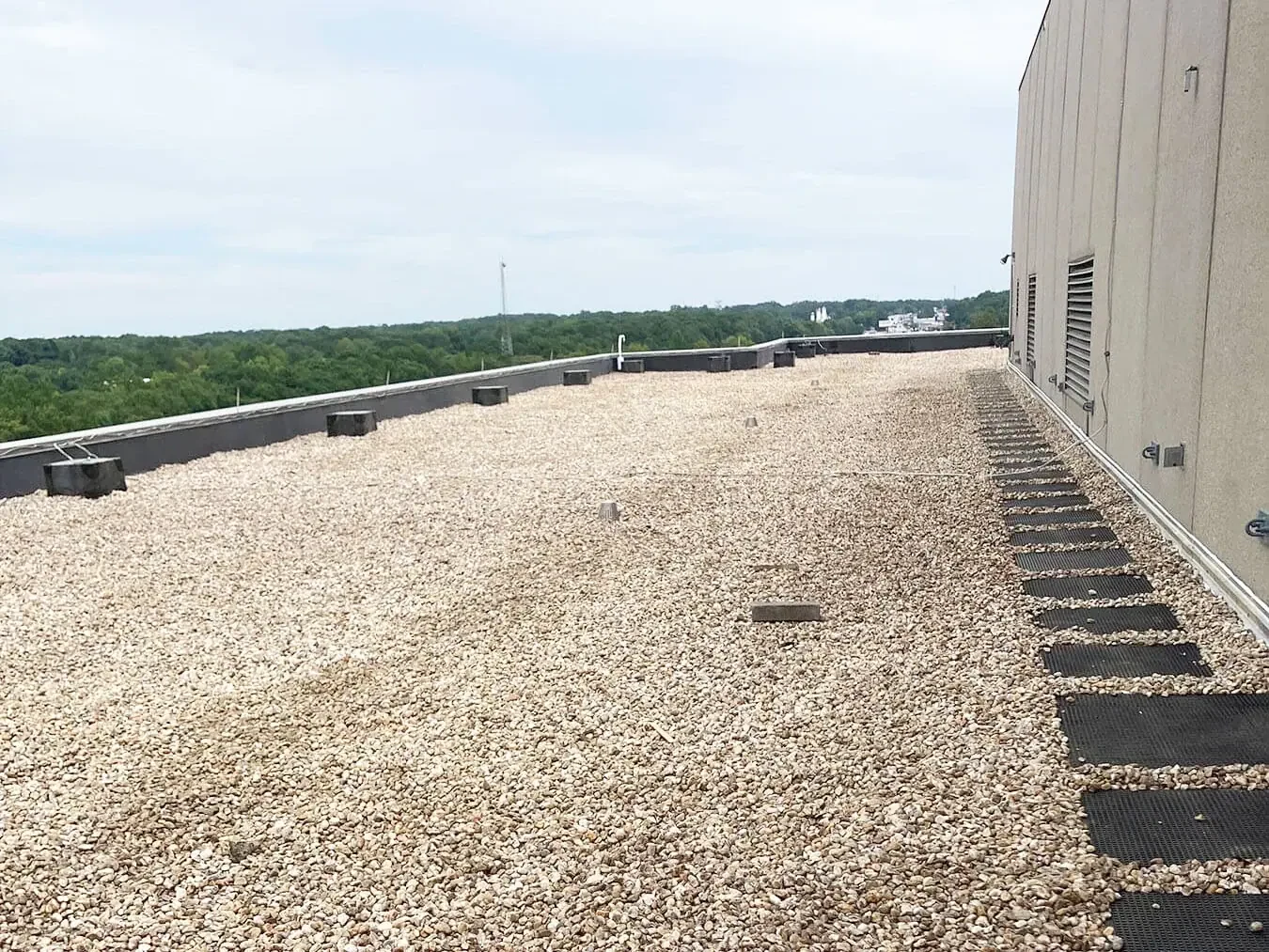
EPDM has been on Gulfport roofs longer than almost any other single-ply system, and a lot of the older warehouses, schools, and office buildings along the coast still carry it. It is a durable, flexible membrane, but the way it was installed decades ago - loose-laid and held down with stone ballast - creates a specific hazard in a hurricane market that owners do not always realize until a storm is bearing down.
Why Ballasted EPDM Is a Different Risk Here Than Elsewhere
Ballasted EPDM uses loose stone to hold the membrane in place instead of fasteners or adhesive, which works fine in most of the country. On the Mississippi coast, that stone becomes a projectile hazard in sustained hurricane-force wind, capable of breaking windows and damaging adjacent roofs and vehicles well before the membrane itself lifts. Building codes in the coastal counties have tightened around this since Katrina, and a lot of older ballasted roofs predate those requirements.
When we inspect an older ballasted EPDM roof, converting it to a fully adhered or mechanically attached system is often the single highest-value recommendation we make, independent of whatever else the roof needs. It is not always the cheapest option in year one, but it removes a liability that a coating or patch cannot fix.
Black EPDM and the Gulf Coast Heat Problem
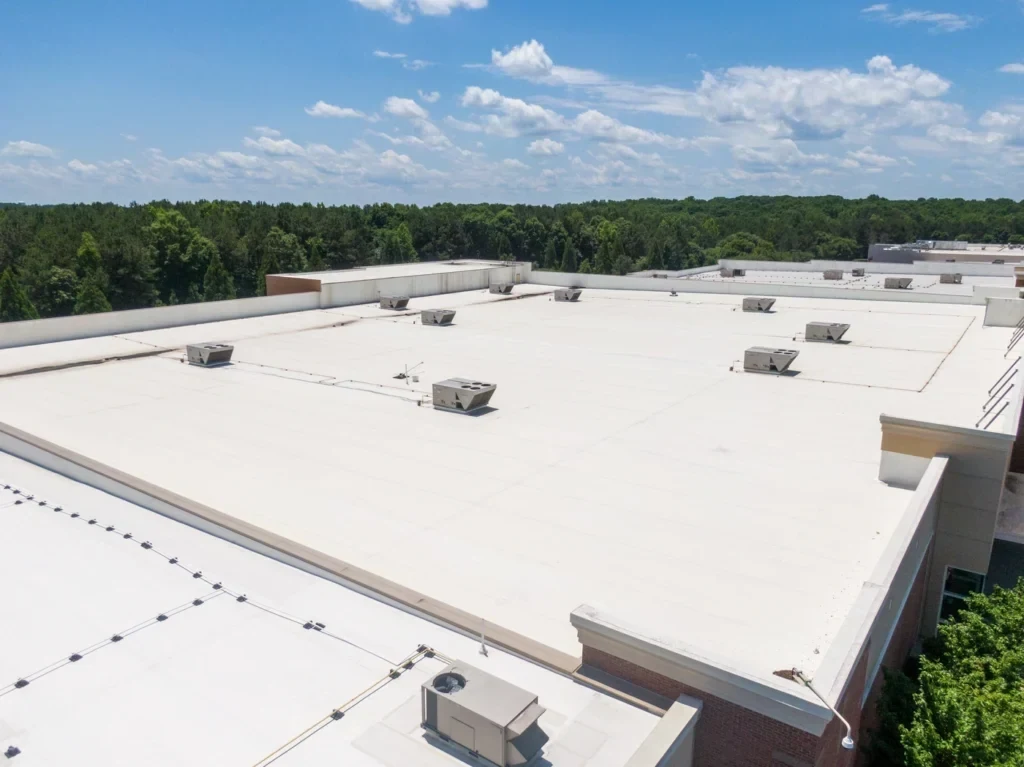
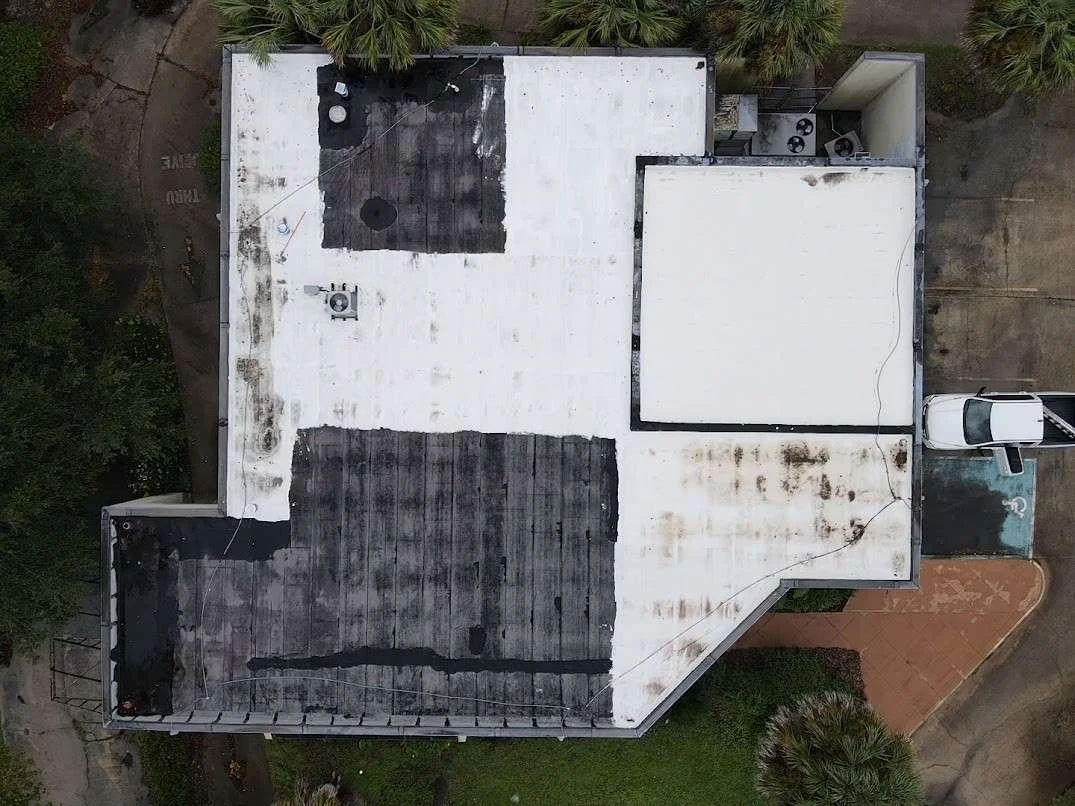
Standard EPDM is black, which absorbs heat aggressively through a Gulfport summer and pushes rooftop temperatures well above what a white membrane would see. That heat load affects cooling costs in occupied buildings below and accelerates the aging of the membrane itself. White EPDM exists and performs the same structurally, and we bring it up on any recover or replacement where energy cost is a factor for the owner, particularly on retail and office buildings with significant conditioned space under the roof deck.
Where Seams and Adhesive Actually Fail
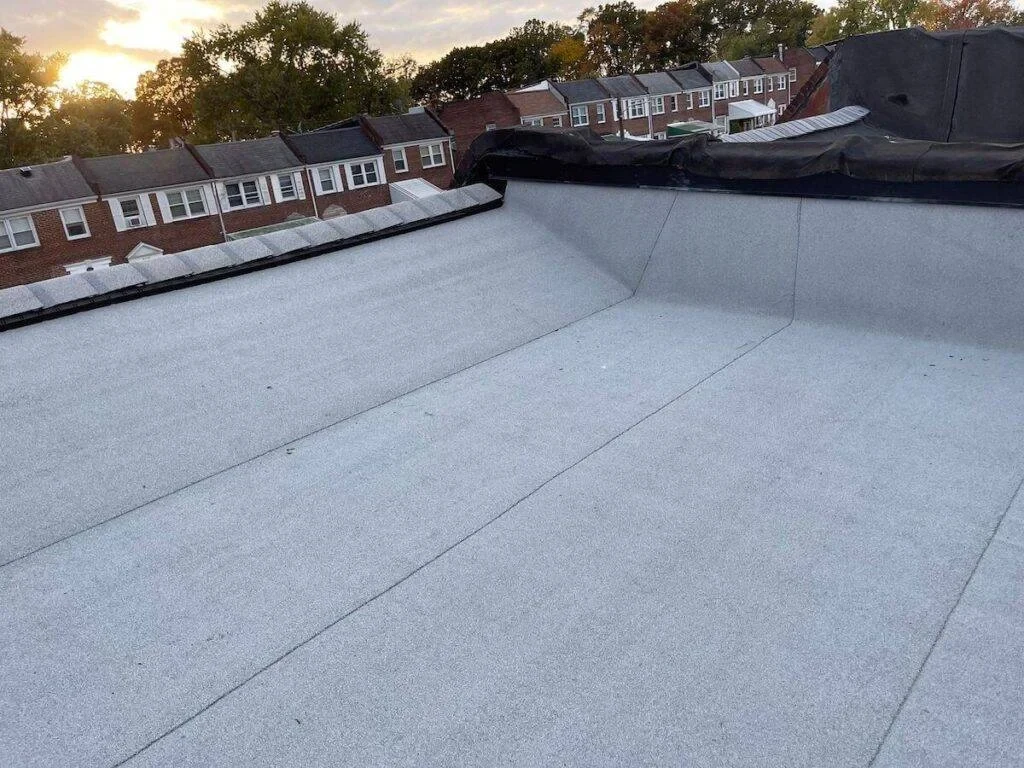
EPDM seams rely on either seam tape or liquid adhesive rather than heat welding, and both are sensitive to humidity and surface preparation at the time of installation. A seam installed on a muggy August afternoon without proper cleaning and priming can look sound for a year or two before it starts to lift. We clean and prime every seam surface as a standard step, not an upcharge, because it is the difference between a seam that lasts the life of the roof and one we get called back to fix.
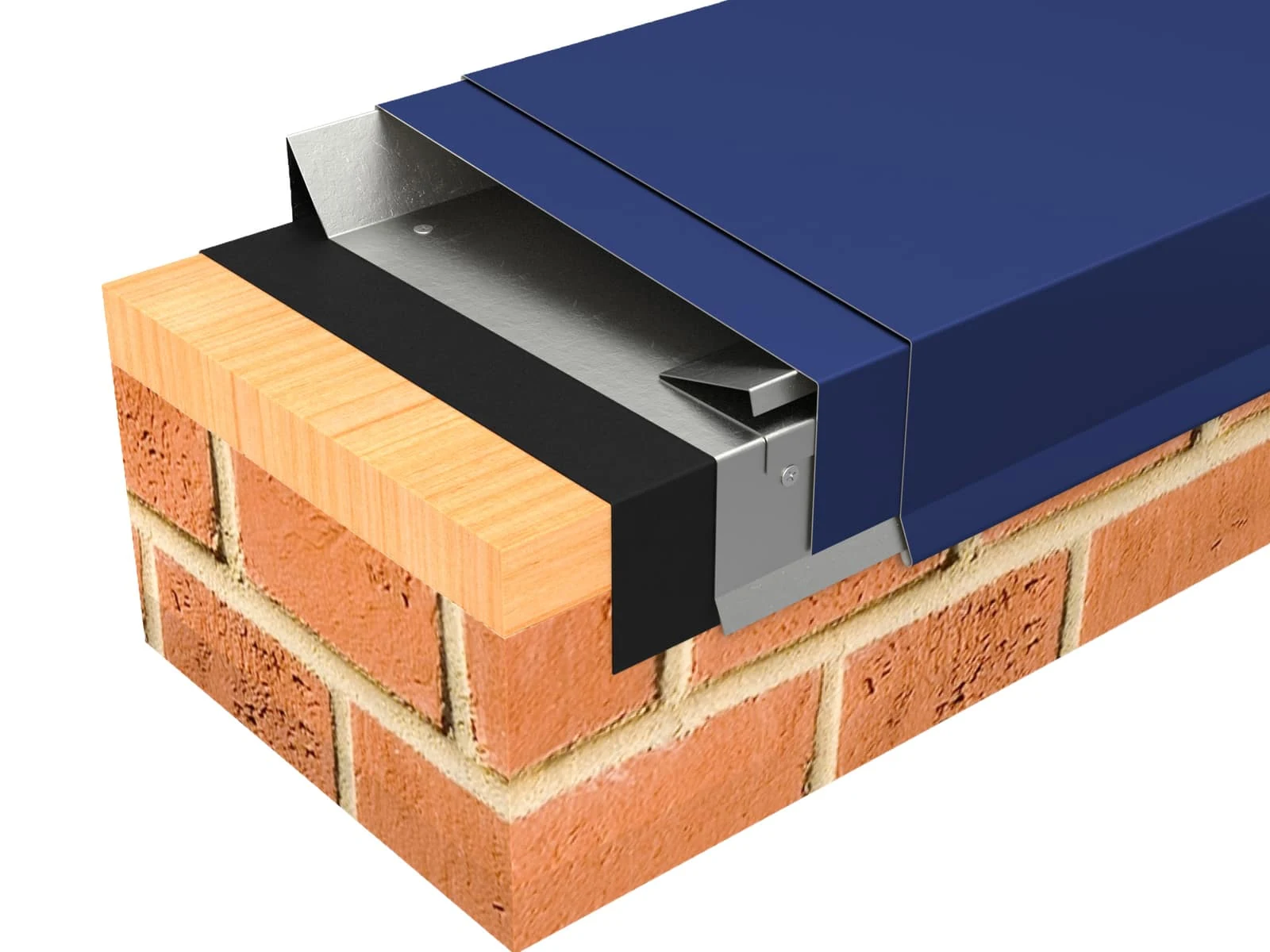
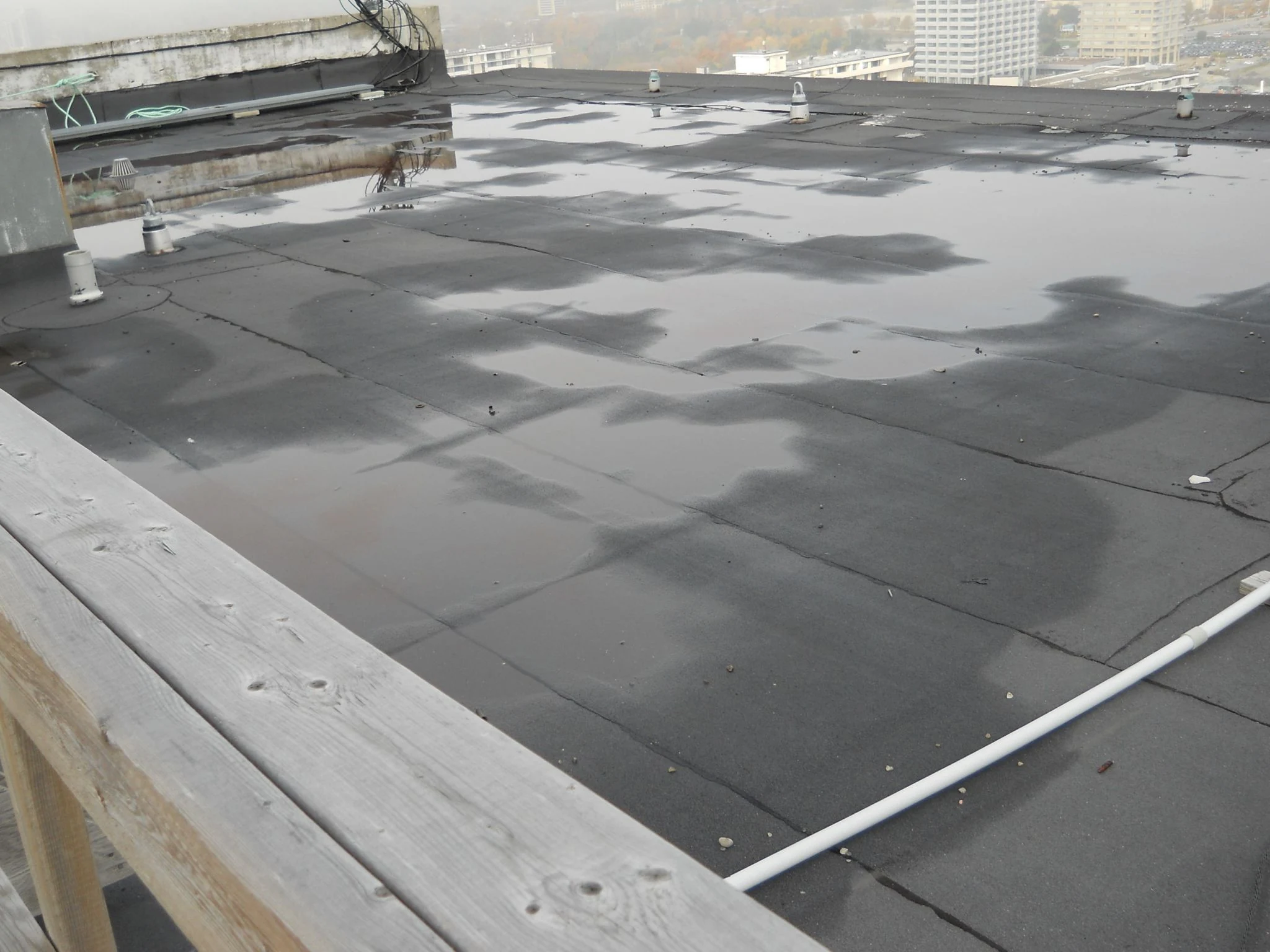
Termination points - parapet walls, curbs, penetrations - are where we see the most EPDM failures on inspection. Salt air degrades exposed adhesive and termination bar fasteners faster here than in a dry inland climate, so those details get checked every time we walk a roof, storm or no storm.
What EPDM Still Makes Sense For
EPDM remains a reasonable choice on buildings where reflectivity is less of a priority, where budget is tight, and where the roof geometry has a lot of penetrations and equipment curbs that benefit from EPDM's flexibility in cold and its forgiving field-splicing. It is also a common recover option over an existing EPDM roof that has reached the end of its service life but has a sound deck underneath.
- Older warehouse and light-industrial buildings near the port
- School and municipal buildings with legacy EPDM roofs
- Buildings with heavy rooftop equipment and irregular penetrations
- Recover projects over existing EPDM with a dry, sound deck
- Budget-constrained projects where reflectivity is a lower priority
Converting an Older Ballasted Roof
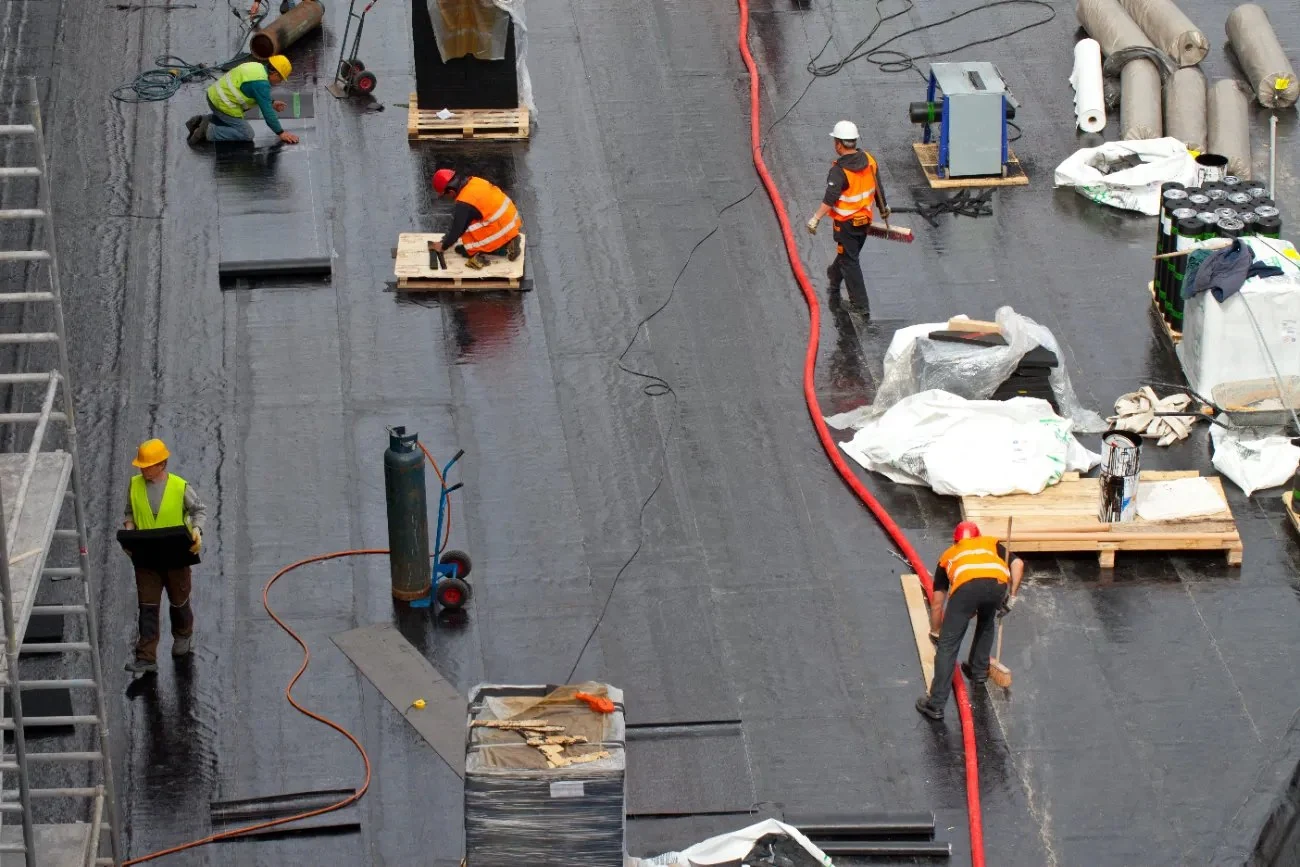
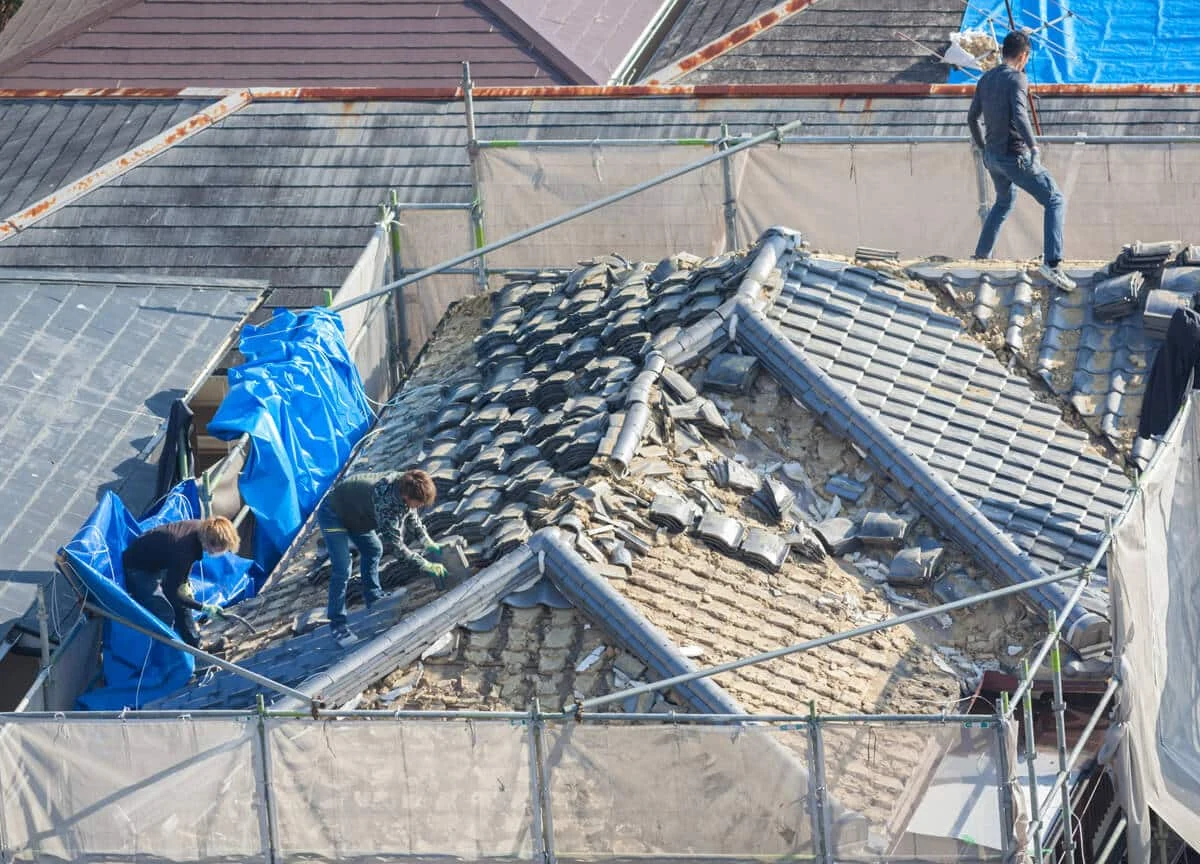
A conversion from ballasted to fully adhered EPDM starts with removing the stone and inspecting the membrane and deck underneath, which often reveals moisture or fastener issues that were hidden by the ballast for years. Once the deck is confirmed dry, the membrane gets adhered directly or mechanically attached with a fastening pattern engineered to current wind uplift requirements for the building's height and exposure category.
This work is disruptive enough that we sequence it in sections on occupied buildings, particularly schools and offices, so the roof is never fully open to weather during hurricane season.
Questions We Get About EPDM Roofing
Is ballasted EPDM against code on the coast now?
Requirements vary by jurisdiction and building exposure category, but many coastal applications now require ballast to be secured or the system converted entirely. We check current code for the specific property rather than assuming.
Can white EPDM replace black EPDM on a recover?
Yes, and we bring it up on nearly every EPDM recover quote, since the material cost difference is modest compared to the cooling load reduction on an occupied building.
How do I know if my EPDM seams are failing before a leak shows up?
Lifted seam tape edges, chalky or gray adhesive bleeding at the seam line, and any visible gap at a termination bar are early signs. We look for all three on every inspection, not only in the spots where a tenant has already reported a leak, since the earliest signs rarely show up as an interior drip.
Is EPDM cheaper than TPO on a coastal building?
Material cost is often comparable or slightly lower, but total project cost depends heavily on whether ballast removal, deck repair, or a full conversion is needed on an older roof.
How long does a properly maintained EPDM roof last here?
Twenty years or more is achievable with sound seams and termination detailing, though salt air exposure and storm cycles make regular inspection more important than the rated membrane lifespan.