Exposed-Fastener Metal Panels for Warehouses and Industrial Buildings
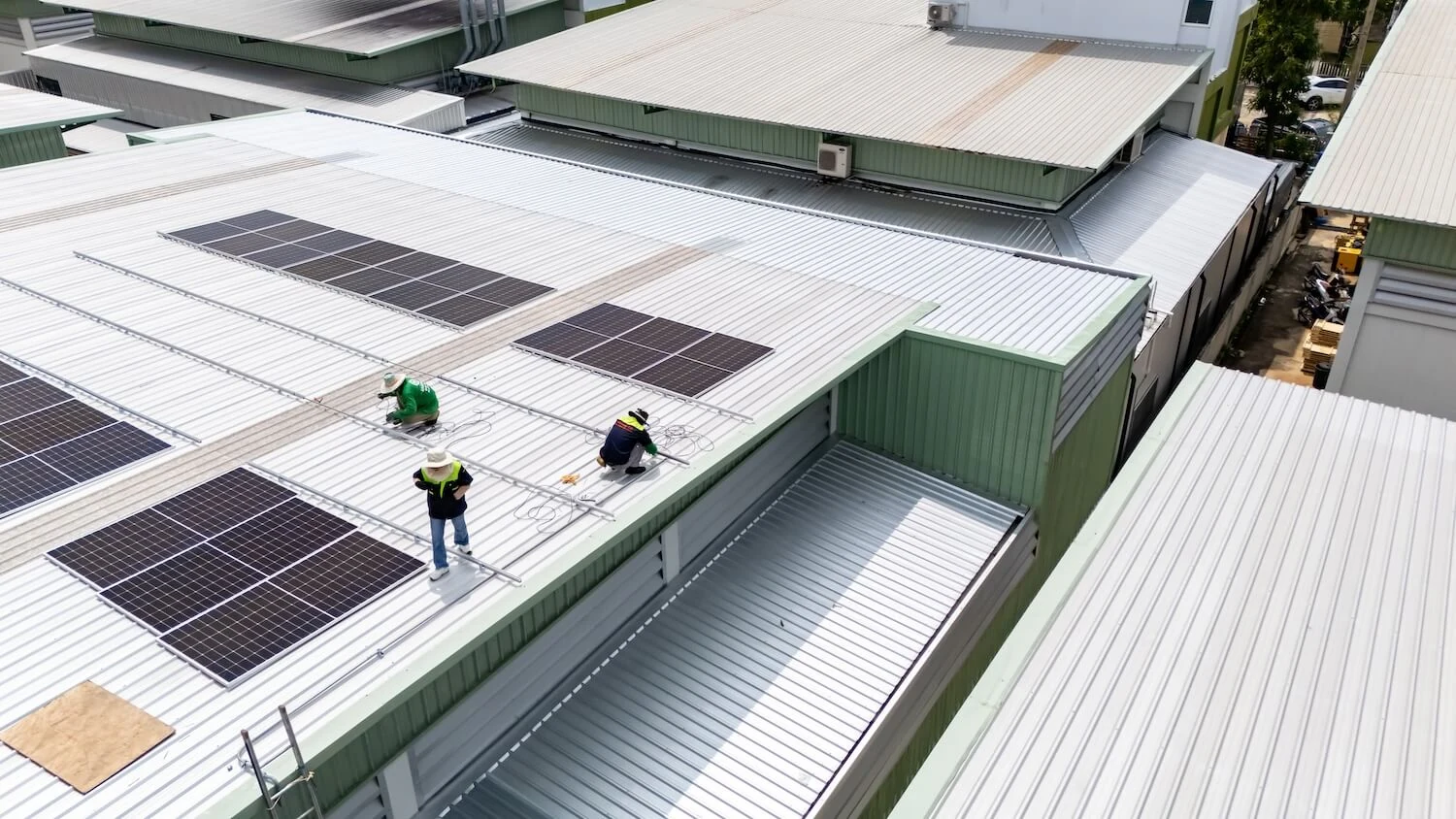
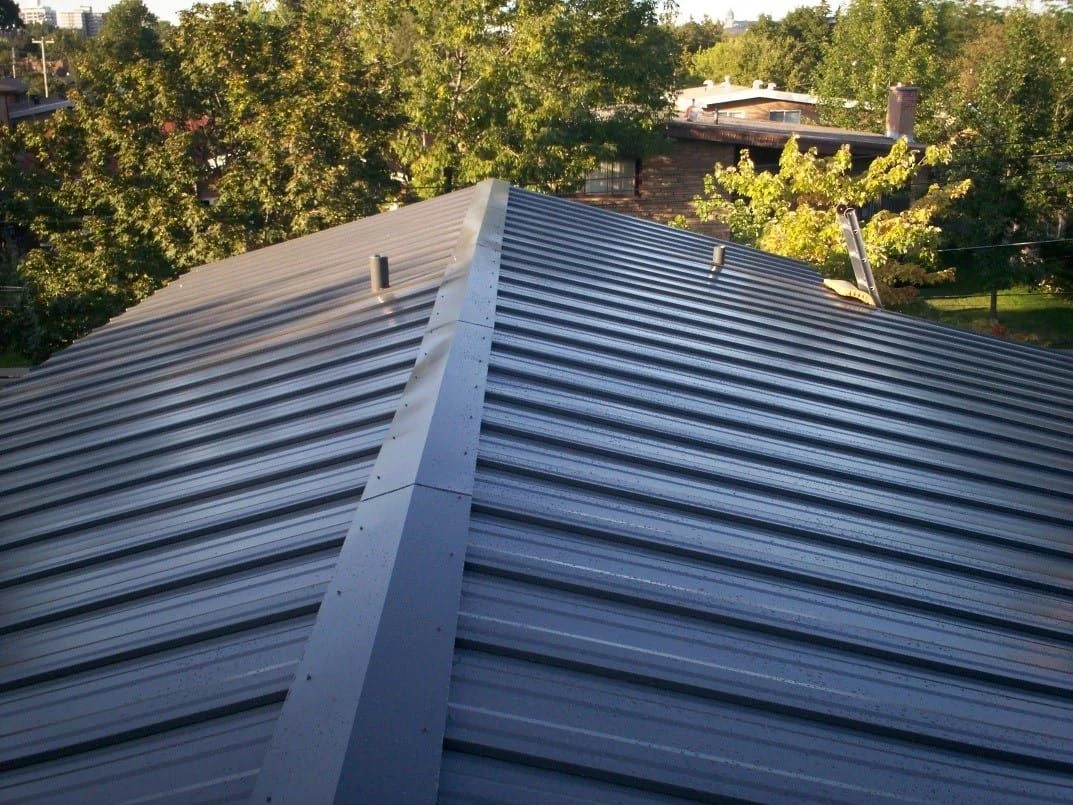
R-panel is the workhorse metal roof of the port and shipbuilding corridor - exposed-fastener, screw-down panels that cost less and install faster than standing seam, and that make sense on a lot of the warehouse and light-industrial buildings along the Highway 49 and I-10 corridors. It is also a system with a known weak point, and on this coast that weak point ages faster than owners usually expect.
Why R-Panel Is So Common on Industrial Buildings Here
Warehouse and distribution buildings serving the Mississippi State Port and the shipbuilding economy around Pascagoula tend to prioritize cost and speed of construction over architectural finish, and R-panel delivers both. It covers a lot of roof area economically, and the panels themselves are durable against impact and general wear in a way that suits industrial use, forklift traffic staging areas below, and buildings where appearance is not the deciding factor.
The tradeoff is the fastener. Every screw that holds an R-panel down penetrates the panel face directly, and every one of those penetrations relies on a rubber or neoprene gasket washer to stay watertight.
Where Exposed Fasteners Actually Fail in This Climate
Gasket washers degrade from UV exposure and thermal cycling everywhere, but the pace is faster here. Long, intense summer sun combined with near-constant humidity breaks down gasket material years ahead of a manufacturer's stated lifespan in a lot of cases, and once a gasket compresses or cracks, water finds its way along the screw shaft and into the building. Salt air adds a second failure mode - fastener heads and washers corrode, especially on buildings within a few miles of open water, and a corroded fastener backs out or breaks off entirely rather than just leaking.
Most of the R-panel leak calls we respond to trace back to fastener population, not a hole in the panel itself. A roof with a thousand or more fastener penetrations only needs a small percentage to fail before interior leaks start showing up in multiple spots that look unrelated from inside the building. That scattered pattern is often what tips us off during a phone call, before we ever get on the roof - an owner describing several separate leaks across a warehouse usually points to fastener failure rather than one isolated hole.
Re-Fastening as a Cost-Effective Alternative to Replacement
Before recommending a full R-panel replacement, we evaluate whether a re-fastening program makes financial sense. That means removing failed fasteners, upsizing to the next screw diameter with a new gasket, and systematically working across the entire roof rather than chasing individual leaks one at a time. On a panel field that is otherwise structurally sound, re-fastening can add a decade or more of service life at a fraction of tear-off and replacement cost.
Re-fastening is not always the right call. If panels themselves have corroded through, if the substructure is compromised, or if the roof has already been through multiple rounds of patch repairs that never addressed the underlying fastener issue, replacement becomes the more defensible long-term decision.
What We Evaluate Before Recommending a Path
An R-panel roof inspection here focuses on a specific set of failure points that determine whether re-fastening, targeted repair, or full replacement is the right call for the building.
- Fastener population sampling for corrosion and gasket condition
- Panel seam laps and closures at ridges and eaves
- Panel gauge and corrosion condition, particularly at panel-to-panel overlaps
- Substructure and purlin condition where interior leaks suggest sustained water intrusion
- Wind uplift performance against current code for the building's exposure category
Wind Performance and Its Limits
R-panel can be engineered to meet wind uplift requirements for this coast when fastener spacing, screw type, and panel gauge are specified correctly, but it does not have the same margin for error that a concealed-fastener system does. Every exposed fastener is a potential loosening point in sustained hurricane wind, which is why fastener spacing tightens at ridges, eaves, and corners regardless of what the field spacing calls for, and why we do not recommend stretching fastener spacing to cut cost on a coastal building.
Questions We Get About R-Panel Roofing
How do I know if my R-panel roof needs re-fastening instead of a full replacement?
A fastener sampling inspection across representative sections of the roof tells us the failure rate, which determines whether targeted re-fastening addresses the problem or whether the panel field itself has deteriorated too far.
How often should R-panel fasteners be inspected on a coastal building?
Annually at minimum, with an additional walk after any significant hail or wind event, since fastener and gasket failure accelerates in this climate compared to inland installations.
Is R-panel a bad choice for a hurricane-exposed building?
It can perform well when properly specified and maintained, but it requires more consistent fastener maintenance than standing seam. For buildings closer to open water, we discuss both options rather than defaulting to the cheaper system.
Can R-panel be coated to extend its life?
A roof coating can extend service life on a panel field that is structurally sound but showing surface corrosion, though it does not address a failing fastener population on its own - that needs direct attention first.
What is the biggest maintenance mistake owners make with R-panel roofs?
Ignoring interior leak reports because they seem minor, when a small leak from a single failed fastener is often an early sign that dozens of nearby fasteners are approaching the same failure point.