Modified Bitumen Systems for Coastal Low-Slope Roofs
Modified bitumen sits between old-style built-up roofing and modern single-ply membranes, and it still gets specified on a fair number of school, office, and retail buildings across Gulfport-Biloxi where owners want the redundancy of a multi-ply system without the full weight and labor of traditional tar and gravel. The details that matter here are which application method gets used and how the cap sheet handles UV over a long coastal summer.
SBS Versus APP - Why the Distinction Matters
SBS-modified bitumen stays flexible across a wider temperature range, which suits a climate that swings between hot, sticky summer days and occasional winter cold snaps that can still stiffen a roofing membrane overnight. APP-modified bitumen handles sustained heat and UV exposure well and is common on roofs with less thermal swing. For most Gulfport applications we lean toward SBS specifically because of how much a roof surface here moves between a July afternoon and a fall cold front.
Both systems are installed in multiple plies, which gives the finished roof a built-in layer of redundancy - if the top ply is damaged by wind-blown debris during a storm, the base ply is often still intact underneath, buying time before a leak reaches the deck. That margin matters on a coast where the gap between a storm making landfall and a roofing crew being available afterward can stretch to weeks once every contractor in the region is working through the same backlog of damaged roofs.
Torch-Free Application on Occupied Buildings
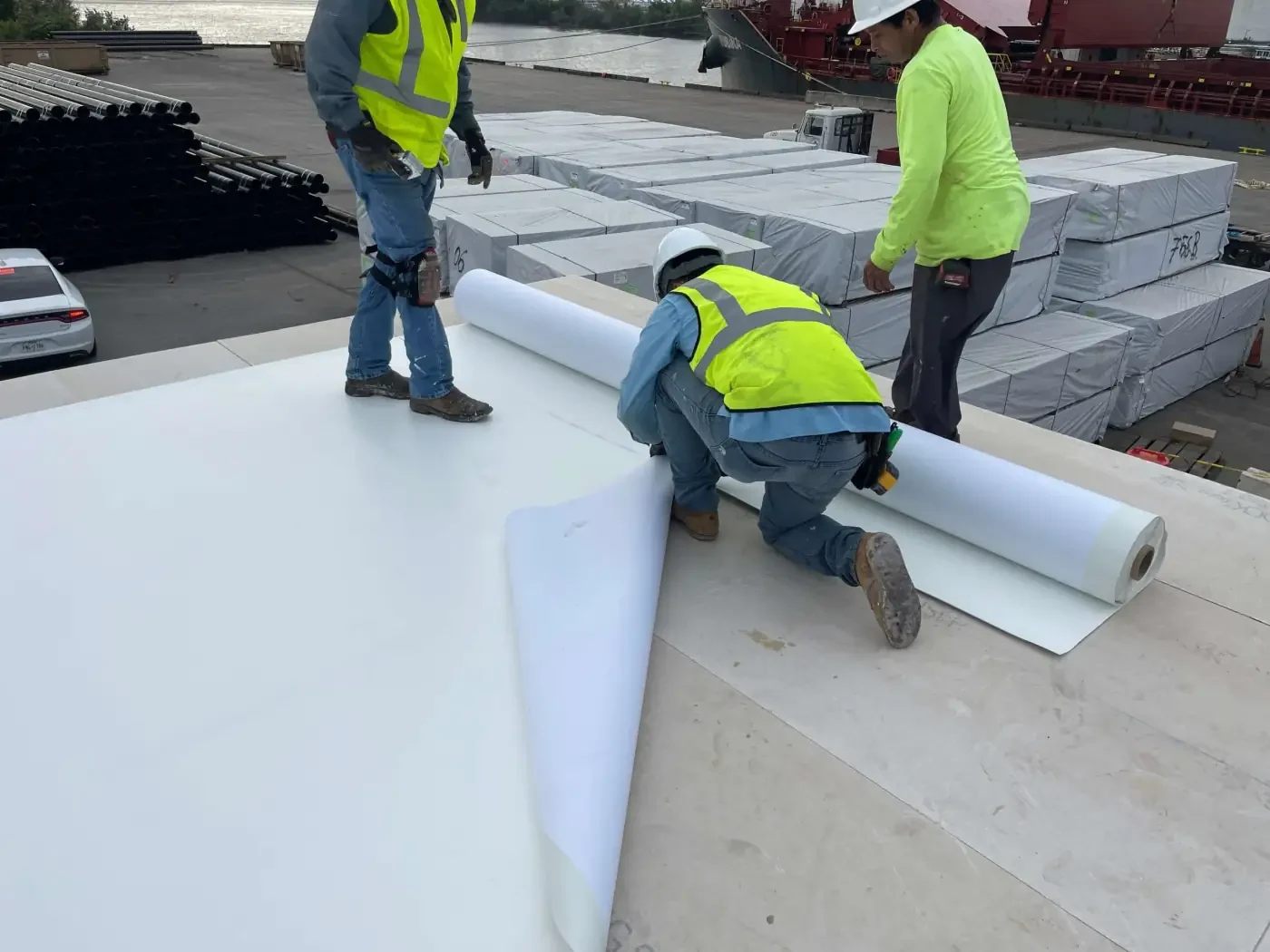
Traditional modified bitumen installation uses a propane torch to melt the bitumen and bond each ply, which is efficient but introduces real fire risk on an occupied building, particularly one with older insulation or combustible construction underneath. On schools, hotels, and any building where evacuation or shutdown is not practical during the work, we use cold-applied adhesive or self-adhered membrane systems that get the same multi-ply redundancy without an open flame anywhere near the deck.
This matters more here than in a lot of markets because so much of what we work on - casino properties, hotel towers, school campuses - simply cannot be vacated for a roofing crew's convenience. Torch-free methods take longer in some cases, but the tradeoff is a job that does not require shutting down a building or clearing a wing for the day.
Cap Sheet Selection for UV and Reflectivity
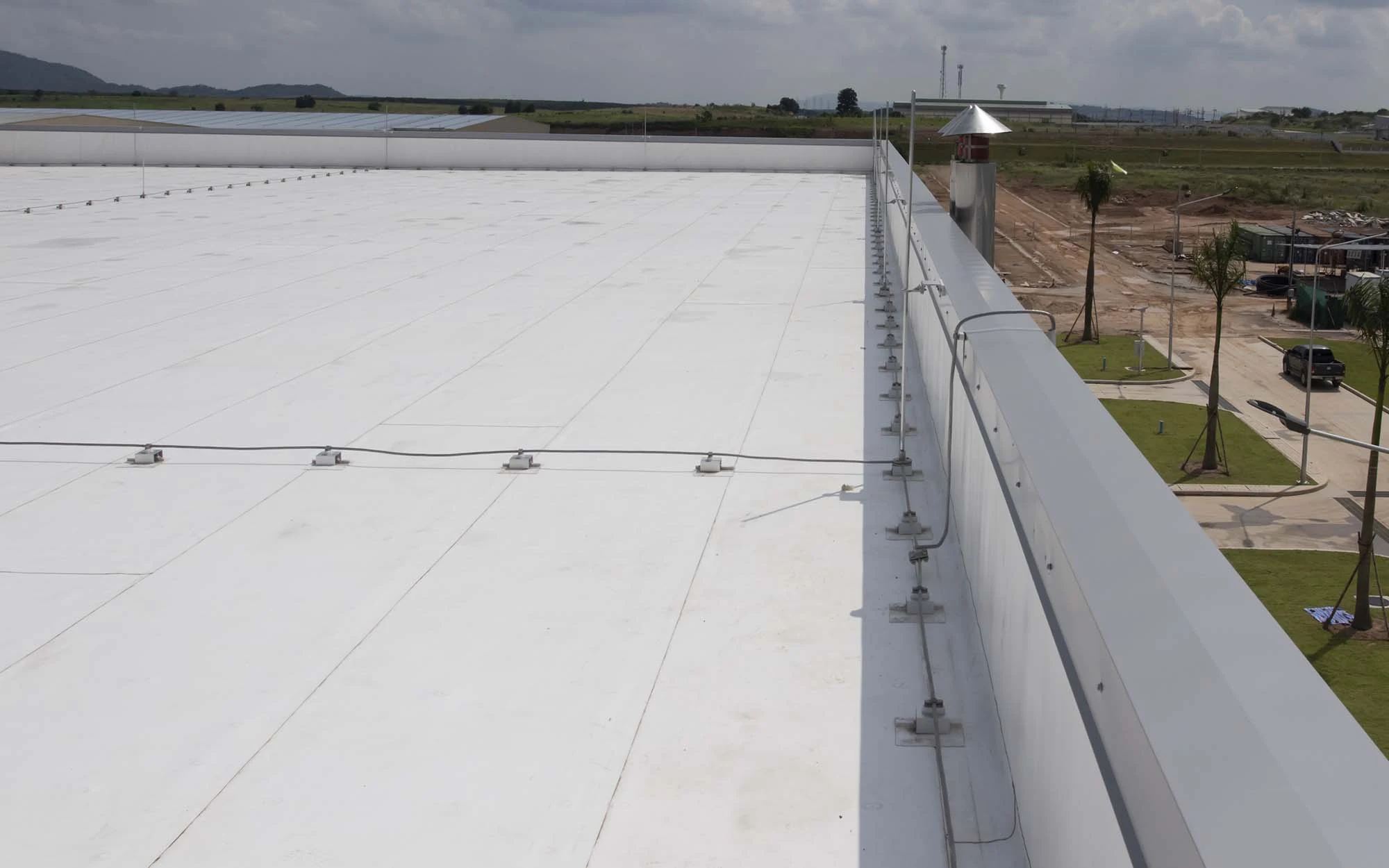
The granulated cap sheet on a modified bitumen roof is what takes the UV beating over the life of the system, and granule color and density both affect how long that protection lasts under a Gulf Coast sun. A white or light-colored reflective cap sheet meaningfully reduces rooftop surface temperature compared to a standard gray or black granule, which matters on buildings where cooling load is already a concern.
We check granule wear as part of every inspection, since bald spots on a cap sheet are where UV starts attacking the bitumen underneath directly, well before a leak develops anywhere near that spot. Owners rarely notice granule loss on their own because it happens gradually over years rather than showing up as a single obvious event, which is exactly why it belongs on a scheduled inspection rather than waiting for a tenant complaint.
Where Modified Bitumen Still Gets Specified
Modified bitumen tends to show up on buildings where the owner wants proven multi-ply redundancy, where the roof geometry has a lot of penetrations that benefit from bitumen's forgiving detailing, or where a recover is going over an existing built-up roof that a lighter single-ply system would not adhere to well.
- School and municipal buildings recovering older built-up roofs
- Hotel and office buildings needing multi-ply storm redundancy
- Buildings with heavy penetration counts and irregular roof geometry
- Occupied structures requiring torch-free installation
- Roofs transitioning from gravel-surfaced BUR to a granulated cap sheet
Storm Damage Signs Specific to Modified Bitumen
Wind-driven debris during a tropical storm or hurricane can lift or tear the top ply of a modified bitumen roof without immediately compromising the base ply, which is exactly the situation where an owner assumes there is no damage because there is no active leak. We check for lifted seams, torn cap sheet, and exposed base ply after every named storm that tracks through the area, since that damage only gets worse with the next round of wind and rain if it goes unaddressed.
Questions We Get About Modified Bitumen Roofing
Is torch-applied modified bitumen ever appropriate on an occupied building?
Sometimes, on sections that can be isolated from occupied space with proper fire watch protocols, but we default to cold-applied or self-adhered methods whenever the building layout allows it.
Can modified bitumen go over an existing built-up roof?
Often yes, as a recover, provided the existing roof is dry and has not reached the maximum layer count allowed under current code for that building.
How does modified bitumen compare to TPO for storm resistance?
Multi-ply modified bitumen offers redundancy that a single-ply membrane does not - damage to the top layer does not automatically mean a breach all the way to the deck.
What causes most modified bitumen failures on this coast?
Seam separation from poor original application, and granule loss on the cap sheet that lets UV degrade the bitumen underneath faster than the rated service life would suggest.
How long does a well-installed modified bitumen roof last here?
Roughly fifteen to twenty years with proper installation and cap sheet maintenance, though storm exposure and UV intensity on this coast make regular granule and seam inspection more important than elsewhere.