TPO Membrane Roofs on the Mississippi Coast
TPO is the single-ply membrane we get asked about most on this coast, and for good reason - it is reflective, relatively light, and cost-competitive on the large flat roofs that dominate Gulfport-Biloxi's warehouse and retail stock. It is also a system that only performs as well as its seams, which matters a great deal in a climate that stresses those seams year-round.
Why TPO Shows Up So Often on Coastal Low-Slope Roofs
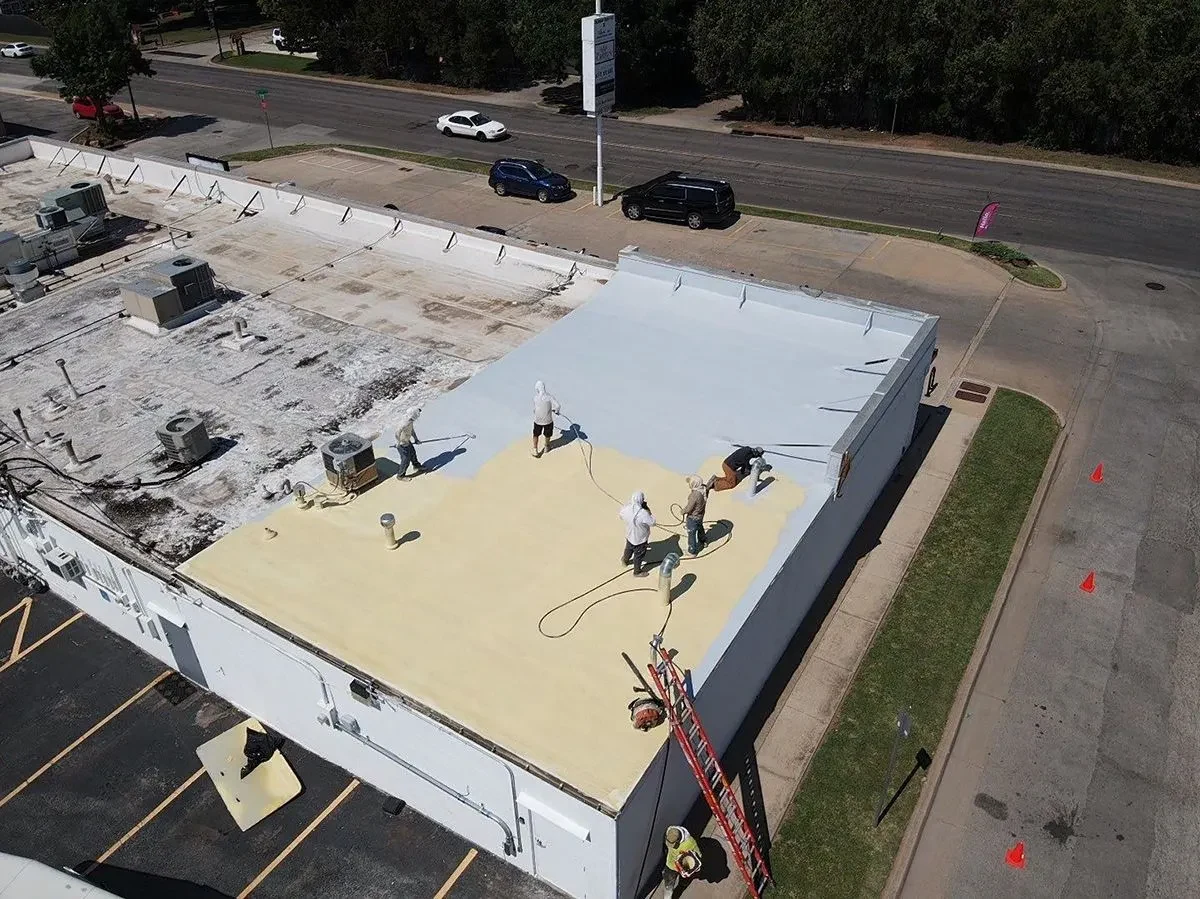
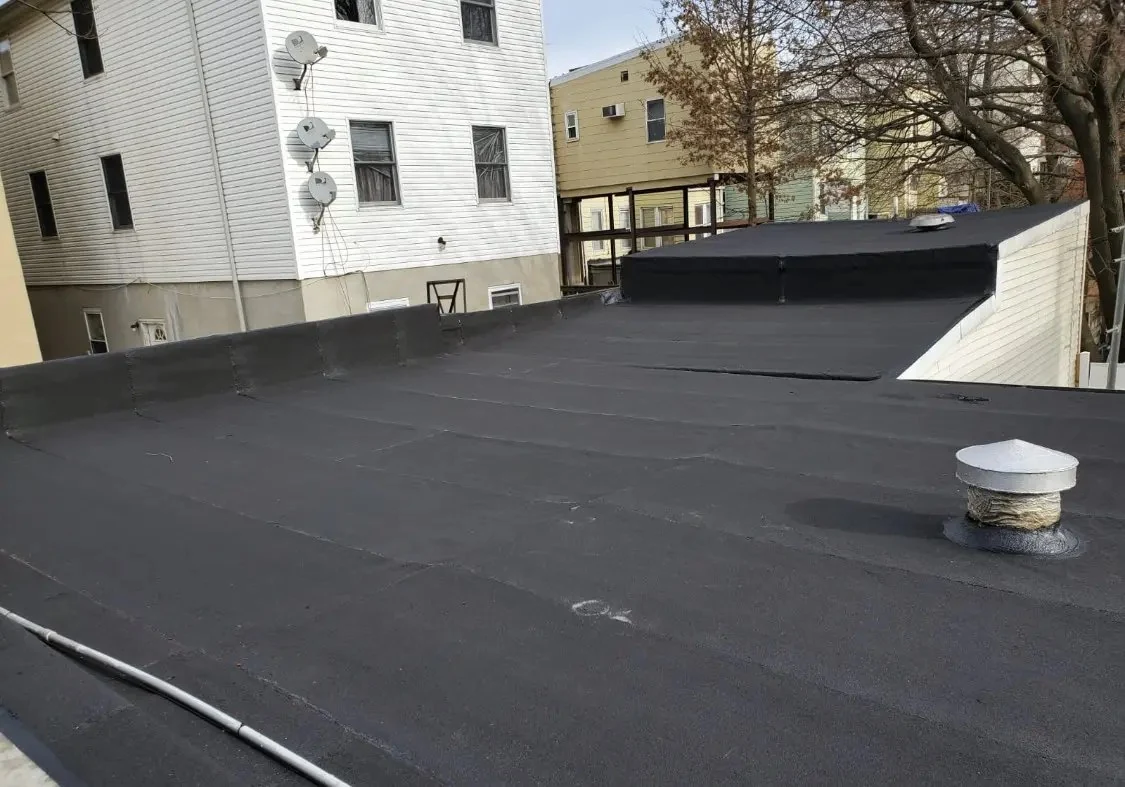
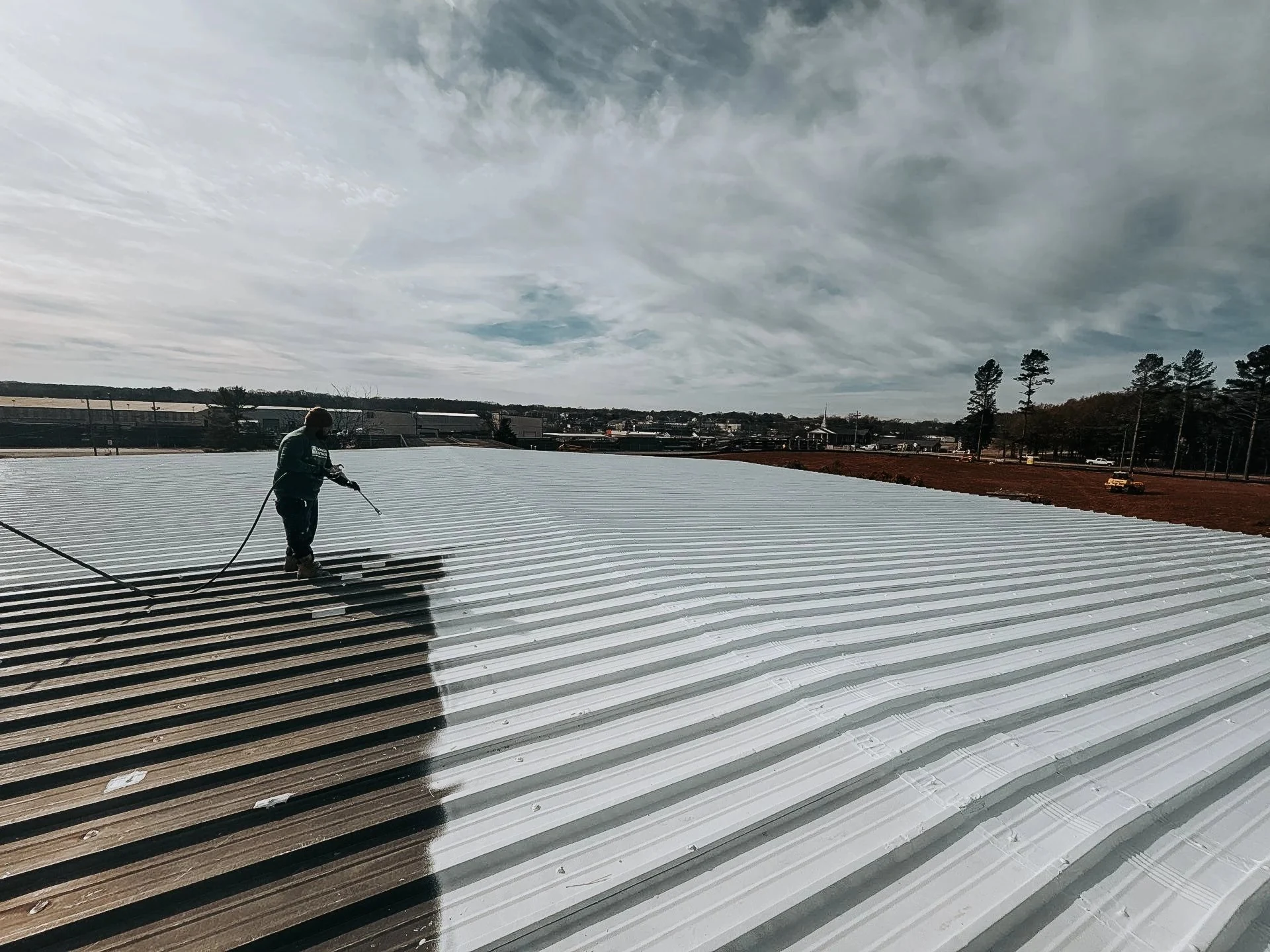
A white TPO membrane reflects a large share of the sun a Gulf Coast roof takes on through a long, humid summer, which keeps rooftop equipment and the deck cooler than a dark membrane would. That matters on kitchens, mechanical rooms, and warehouse space where interior heat load is already a problem. TPO also comes in widths that cut down on seam count compared to older systems, and it is light enough that recover applications over an existing deck rarely trigger a structural review.
None of that means TPO is a default answer. On a roof with heavy foot traffic from rooftop mechanical work, or on a building where grease or solvent exposure is likely, we look hard at whether TPO's chemical resistance is actually adequate before recommending it over PVC.
Seam Welding Is Where TPO Roofs Actually Fail Here
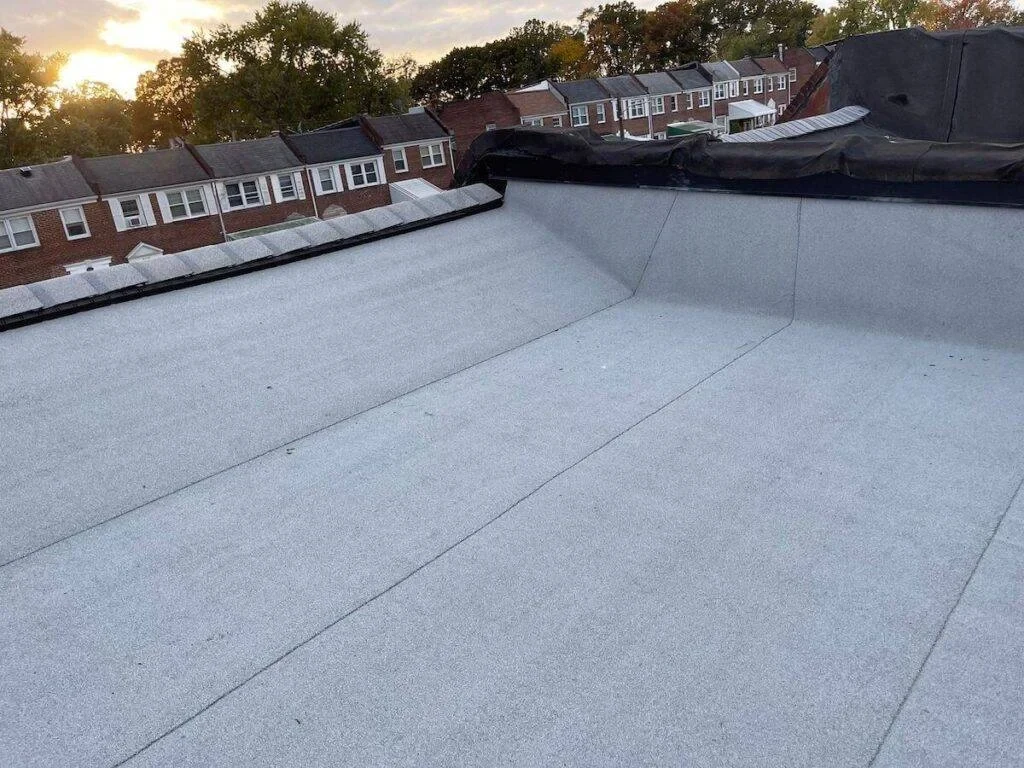
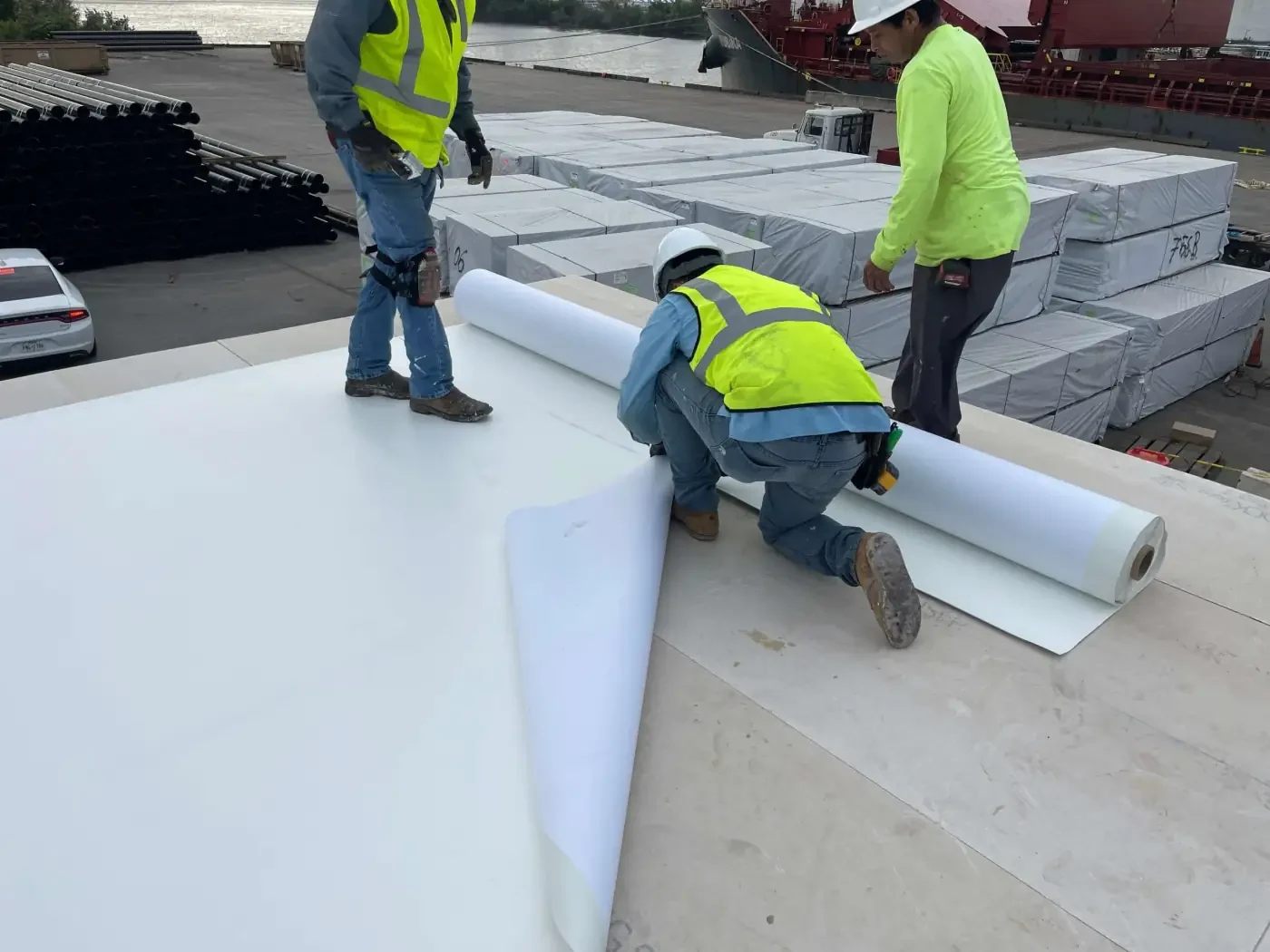
Almost every TPO failure we get called out for traces back to a seam, not the membrane field itself. Heat-welded seams depend on consistent welder temperature, travel speed, and probe testing at the time of installation, and a rushed crew working ahead of an incoming storm system is exactly the situation where shortcuts happen. We probe-test seams as we go rather than at the end of a job, so a bad weld gets caught and redone before it is buried under the next course.
Humidity complicates welding on this coast in ways crews from drier climates do not always account for. Membrane that has sat out with morning dew or afternoon humidity needs to be dry before it gets welded, or the seam looks fine on the day of installation and opens within a season.
Wind Uplift and Fastening for Hurricane-Zone Buildings
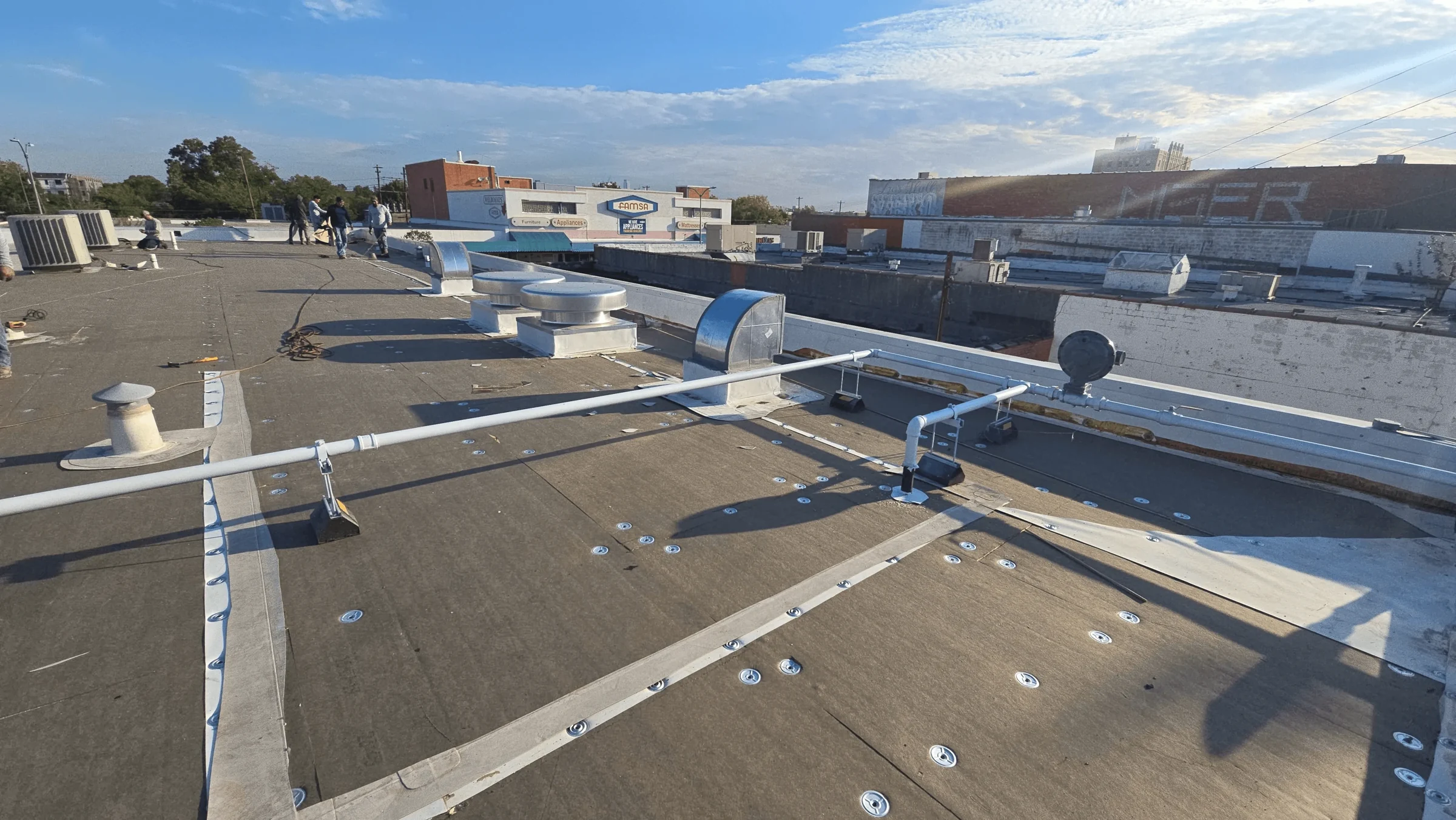
Mechanically attached TPO is common because it is cost-effective, but the fastening pattern has to be engineered to the wind uplift requirements for this zone, not a generic manufacturer minimum. On buildings closer to the water, or on taller structures where corner and perimeter uplift pressures spike, we often move to induction-welded or fully adhered systems that eliminate exposed fastener heads entirely.
Perimeter and corner zones take the worst of it in a hurricane, and that is where we tighten fastener spacing regardless of what the field pattern calls for. A roof that meets code in the field but skimps at the edges is the roof that peels back first.
Where We See TPO Specified on This Coast
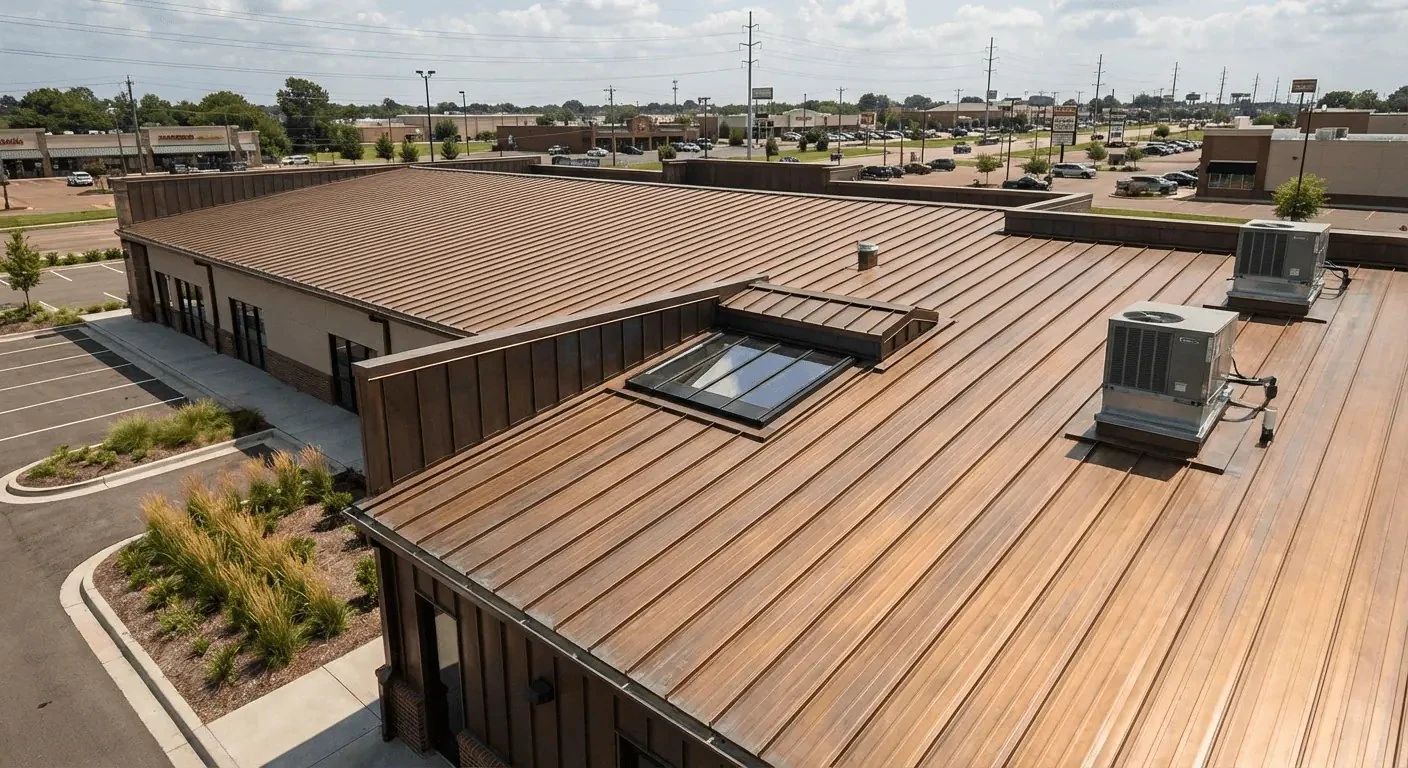
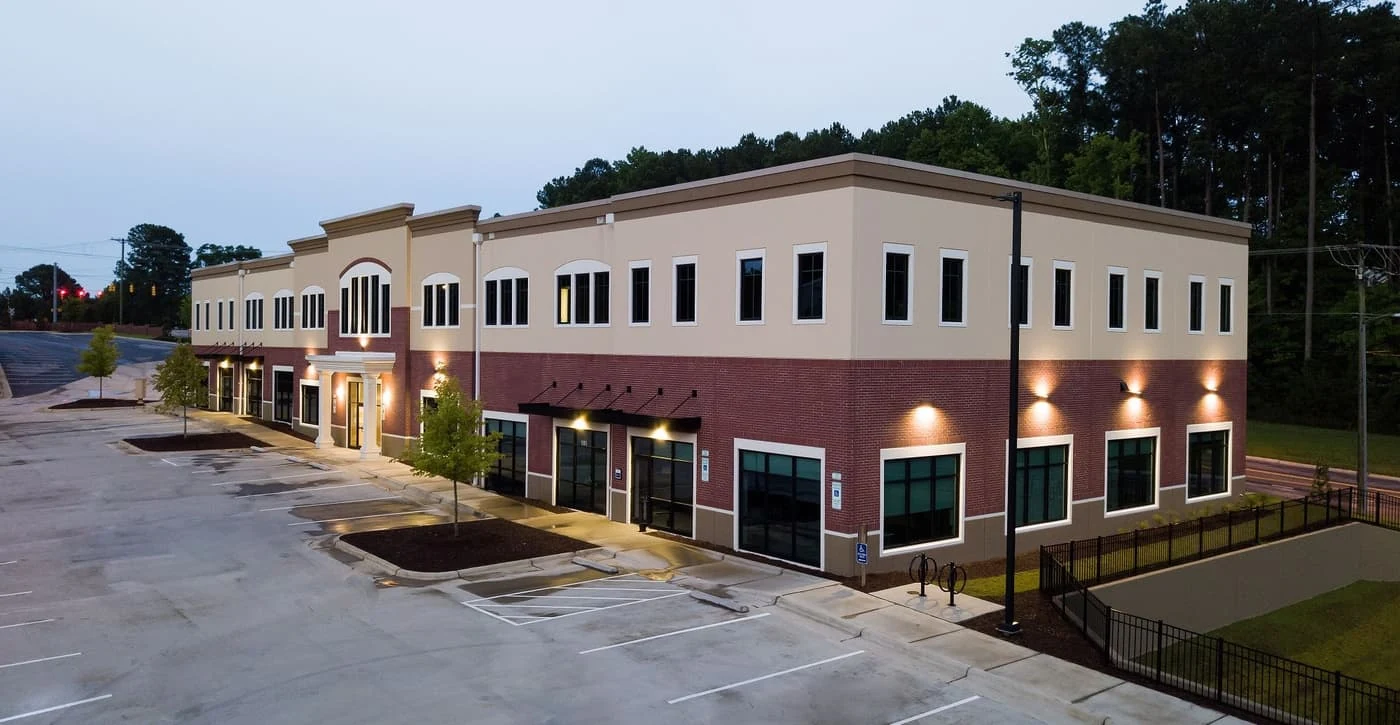
Big-box retail along Highway 49 and the US-90 corridor accounts for a large share of the TPO roofs we work on, along with distribution and light-industrial buildings serving the port and shipbuilding economy. Casino properties use TPO on back-of-house structures, parking decks, and lower-profile additions where a membrane roof makes more sense than an architectural metal system.
- Retail boxes and strip centers along US-90 and Highway 49
- Distribution and warehouse buildings near the port and rail lines
- Casino back-of-house, kitchen, and parking structure roofs
- School and community college additions with low-slope sections
- Office and medical buildings recovering an aging built-up roof
Maintaining a TPO Roof in Salt Air and Heavy UV
TPO holds up well against UV, but salt air still finds the vulnerable points - rooftop unit curbs, penetrations, and any exposed fastener head that was not fully sealed. We inspect those points on a schedule tighter than the manufacturer's standard recommendation, because a fastener that starts corroding on a coastal roof does not slow down.
Ponding water is the other issue that shows up more on this coast than inland, since drains and scuppers sized for average rainfall get overwhelmed during tropical downpours. Standing water accelerates dirt and biological growth on a TPO membrane and can shorten its service life well before the material itself would otherwise fail.
Questions We Get About TPO Roofing
How thick a TPO membrane do we need for a coastal building?
Sixty-mil is the common baseline for most retail and warehouse applications here, and we move to eighty-mil on roofs with heavier foot traffic, mechanical equipment, or a longer expected service life before the next recover.
Can TPO be installed over an existing built-up or modified bitumen roof?
Often yes, as a recover, provided the existing deck and insulation are dry and the roof has not already reached the maximum number of layers allowed under current code. We confirm moisture condition first, not after the membrane goes down.
Does TPO hold up against casino kitchen exhaust and grease?
Standard TPO has limited grease resistance. On roofs near kitchen exhaust fans we either specify a grease-resistant TPO formulation or recommend PVC, which handles that exposure better over time.
How long does a properly installed TPO roof last on this coast?
Well-installed TPO commonly reaches fifteen to twenty years of service here, though salt air and storm exposure make seam and fastener inspection more important than the membrane's rated lifespan alone.
What is the biggest mistake owners make with TPO roofs?
Assuming a reflective white membrane needs less attention than an older dark roof. TPO still needs seam inspection, drain maintenance, and post-storm walkthroughs, and skipping those is how a small seam issue turns into a deck problem.